

What to Do in Tokyo: A Practical Plan for First-Timers
Gappy Local Expert Team
TL;DR
Tokyo is efficient but complex; success relies on logistics (transport cards) and strategic accommodation choices.
- Critical: Book high-demand attractions (Shibuya Sky, teamLab) at least 3-4 weeks in advance.
- Strategy: Divide your days by area (West vs. East) to avoid wasting time on trains.
Quick Checklist:
- Connectivity: Pre-install an eSIM (Ubigi, Airalo) before you fly. Public Wi-Fi is spotty.
- Transport: Add a "Suica" or "PASMO" card to your Apple Wallet, or buy a tourist IC card at the airport.
- Cash: Carry ~10,000 JPY in cash. Many ticket machines and authentic ramen shops do not take cards.
- Walking: Expect 15,000+ steps daily. Wear broken-in sneakers.
- Trash: There are no public trash cans. Carry a small plastic bag to hold your garbage until you return to your hotel.
Intro
Deciding "what to do in Tokyo" is often less about finding attractions and more about fitting them into a coherent plan. The city is massive—essentially a cluster of several smaller cities connected by the world's most complex train system. First-timers often underestimate the travel time between districts and the necessity of advance bookings.
This guide is not just a list of spots; it is a strategic framework. We cover how to navigate the rail network, where to set up your base, and how to execute a 3-day loop that covers the highlights without burnout.
1. Master the Transport (IC Cards & Subways)
The Verdict: Never buy individual paper tickets. They are slow and confusing. Use an IC Card (Suica or PASMO).
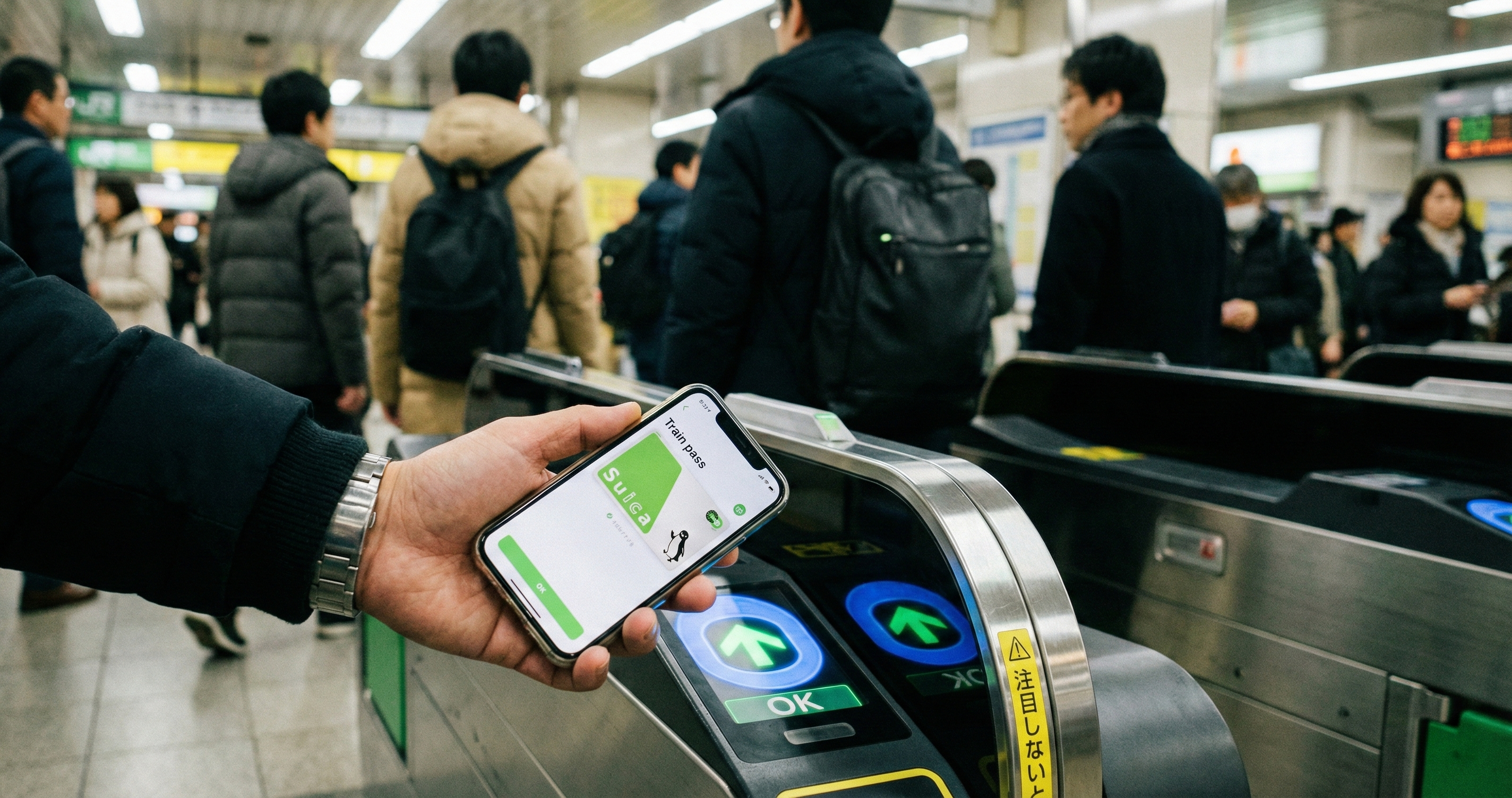 Navigating Tokyo's train system is the first skill every traveler needs to master.
How to Do It
- iPhone Users: Open Apple Wallet > Add Card > Transit Card > Suica or PASMO. You can charge it with Apple Pay instantly. This works on all trains, buses, and convenience stores.
- Android/Physical Card: If you cannot use mobile transit, buy a "Welcome Suica" or "PASMO Passport" at Haneda/Narita airports. Note: Sales are sometimes suspended due to chip shortages; check the JR East or PASMO official sites for current availability.
Local Tips
- Google Maps is Essential: It tells you exactly which car to board (e.g., "Car 4 is near the exit") and which exit number to use.
- Exit Numbers Matter: "Shinjuku Station" has over 200 exits. If you take the wrong one, you could be 15 minutes away from your destination. Always follow the yellow signage.
Common Mistakes: Taking Taxis for Long Distances: Taxis are expensive. A ride across the city can easily cost 5,000–8,000 JPY. Use them only for short "last mile" hops.
Mini Recap: Get a mobile Suica/PASMO if possible. Trust Google Maps blindly for exit numbers.
2. Choose Your Base Strategically (Where to Stay)
The Verdict: Stay within walking distance of the JR Yamanote Line (the green loop line). It connects all major tourist hubs.
Criteria for Choosing
- West Side (Shinjuku / Shibuya): Best for nightlife, shopping, and day trips to Hakone/Mt. Fuji. It is chaotic, loud, and energetic.
- East Side (Ueno / Asakusa / Tokyo Station): Best for history, culture, and direct airport access (Skyliner to Narita). It is quieter at night and generally more affordable.
Local Tips
- Business Hotels: Chains like APA Hotel, Dormy Inn, or Super Hotel offer clean, compact rooms at reasonable rates. Dormy Inn often includes a hot spring (onsen) and free late-night ramen.
Common Mistakes:
- Booking in Roppongi: While popular for nightlife, it is not on the JR Yamanote line, requiring subway transfers to get almost anywhere else.
- Underestimating Room Size: Japanese hotel rooms are small (often 12–15 sqm). If you have two huge suitcases, you might not be able to open them both on the floor.
3. The "Must-Book" List (Advance Planning)
The Verdict: You cannot just "show up" to Tokyo’s most popular modern attractions.
The Reservation Checklist
- Shibuya Sky: Book 4 weeks out for sunset slots. (Official site/Klook).
- teamLab Planets (Toyosu): Book 2–4 weeks out.
- Ghibli Museum: Tickets go on sale on the 10th of the previous month and sell out in minutes.
- Pokemon Cafe: Extremely difficult to book; reservations open 31 days in advance at 6:00 PM JST.
Local Tips
- Disney Resort: Tickets are variable pricing and bought online. Weekdays (Tuesday-Thursday) are significantly less crowded.
- Restaurants: High-end Omakase sushi or famous kaiseki spots need reservations via platforms like TableCheck or Omakase.in.
Common Mistakes: Going to the Ghibli Museum without a ticket: They will strictly deny entry. There are no same-day tickets.
Gappy Helps
Struggling to find availability for teamLab or a sushi restaurant? Or confused about which train pass is worth it? Chat with Gappy to get real-time advice, check ticket availability, or find alternative spots if your top choice is booked out.
Get personalized Tokyo planning advice →
4. The Fail-Proof 3-Day Itinerary
The Verdict: Group your activities by location to save hours of travel time.
Day 1: The Modern West (Shibuya & Harajuku)
- Morning: Meiji Jingu Shrine (Peaceful forest).
- Lunch: Harajuku (Takeshita Street for crepes/snacks, or Omotesando for cafes).
- Afternoon: Shibuya Crossing & Shopping (Parco, Don Quijote).
- Sunset: Shibuya Sky observation deck.
- Dinner: Shinjuku (Omoide Yokocho or Kabukicho).
Day 2: The Historic East (Asakusa & Ueno)
- Morning: Senso-ji Temple (Arrive by 8:00 AM to beat crowds).
- Lunch: Street food on Nakamise Dori or Tempura near the temple.
- Afternoon: Ueno Park (Museums) or Akihabara (Anime/Gaming).
- Evening: Tokyo Skytree or a river cruise.
Day 3: Digital Art & Luxury (Toyosu & Ginza)
- Morning: teamLab Planets (Toyosu).
- Lunch: Toyosu Market (Fresh sushi) or Tsukiji Outer Market.
- Afternoon: Ginza (Luxury shopping, Uniqlo flagship).
- Dinner: Yurakucho (Gado-shita under-train dining).
Common Mistakes: Doing Asakusa and Shibuya in the same morning: They are on opposite sides of the city (40 mins by train).
5. Dining Logistics: How to Eat
The Verdict: You don't always need a reservation to eat well, but you need to know how to find food.
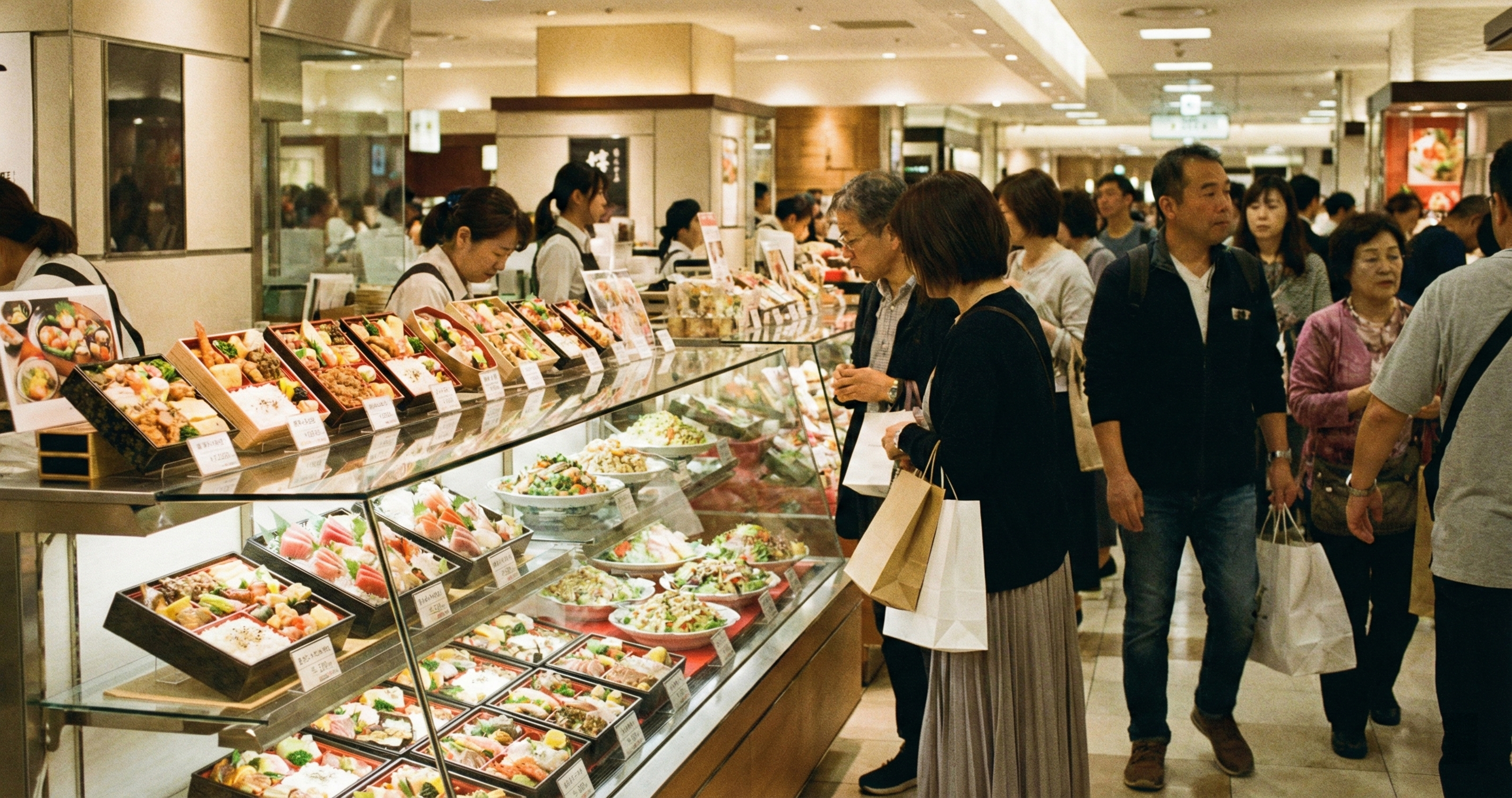 Don't underestimate department store basements (Depachika) for high-quality meals.
How to Choose
- Tabelog: The Japanese equivalent of Yelp. A score over 3.5 is considered excellent (locals are harsh critics). Google Maps ratings are also reliable (4.0+ is good).
- Department Store Basements (Depachika): Located under major stations (Shinjuku Isetan, Tokyo Daimaru). They sell high-quality bento boxes and deli foods—perfect for a hotel room dinner if you are tired.
- Convenience Stores (Konbini): 7-Eleven, Lawson, and FamilyMart offer high-quality egg sandwiches, onigiri, and hot fried chicken.
Local Tips
- Queueing: Popular Ramen shops will have a line. It moves fast. Buy your ticket from the vending machine before or while you line up, depending on the shop's rule.
Mini Recap: Use Tabelog/Google Maps. Don't underestimate department store food or convenience stores.
Next Steps
You have the framework. Now, take action:
- Set up Mobile Suica: Do this on your phone right now so you are ready upon landing.
- Secure the "Big" Tickets: Check dates for Shibuya Sky and teamLab immediately.
- Refine the Route: Use Gappy to customize the 3-day itinerary based on your hotel location and specific interests.
Customize your Tokyo itinerary →
FAQs
What is the first thing I should do when I arrive in Tokyo?
Sort out your connectivity and transport. First, ensure your eSIM or Pocket Wi-Fi is working. Second, get an IC Card (Suica or PASMO) on your phone or at the station. Having internet and a tap-to-pay transit card allows you to navigate immediately. Then, take the express train (N'EX or Skyliner) to your hotel area to drop off bags.
Is 3 days enough for Tokyo?
3 days is the minimum to see the highlights. You can spend Day 1 in the West (Shibuya/Shinjuku), Day 2 in the East (Asakusa/Akihabara), and Day 3 for a specific interest like Disney or teamLab. However, 5 to 7 days is recommended if you want to explore neighborhoods deeply or take day trips to Mt. Fuji or Kamakura.
Do I need cash in Tokyo?
Yes. While cashless payments are growing, many ticket machines for local trains, older restaurants, ramen shops, and street stalls still only accept cash. Carry about 10,000 to 20,000 JPY ($70–$140 USD) safely. Convenience stores have ATMs that accept international cards if you run low.
Is it better to buy a JR Pass for Tokyo?
Generally, no. If you are staying only in Tokyo, the JR Pass is a waste of money. Even for a round trip to Kyoto, the price increase in late 2023 makes the national JR Pass hard to justify for many itineraries. Buying individual Shinkansen tickets or regional passes (like the Tokyo Wide Pass) is usually cheaper.
How late do trains run in Tokyo?
Trains stop running between 0:00 AM and 0:30 AM. There is no 24-hour subway. If you miss the last train, you must take a taxi (which can be very expensive at night) or stay out until the first train starts around 5:00 AM. Check "Last Train" times on Google Maps carefully.
What is the best app for navigating Tokyo?
Google Maps is the most versatile for walking and trains. Japan Travel by NAVITIME is excellent for finding routes compatible with specific rail passes (like the JR Pass or Tokyo Subway Ticket) and for filtering out routes that require expensive reserved seats.
Can I just walk between major districts?
Sometimes. Walking from Shibuya to Harajuku (Cat Street) or Hibiya to Ginza is pleasant and efficient. However, walking from Shinjuku to Shibuya takes 40+ minutes, and walking from Asakusa to Shibuya takes hours. Use trains for the big jumps between the East and West sides of the city.
Written by