

What to Do in Roppongi: Art, Views & Nightlife Guide
Gappy Local Expert Team
TL;DR
Roppongi is Tokyo’s district of contrasts: high-end art and business by day, energetic (and sometimes gritty) partying by night. It is home to the "Art Triangle" (three major museums) and the city's best Tokyo Tower views.
- Safety Warning: While generally safe, strictly ignore street touts soliciting for bars/clubs at night.
Quick Checklist:
- Best Time: Late afternoon to catch a museum, then sunset views, then dinner.
- Weather: Excellent for rainy days (Roppongi Hills and Midtown are massive indoor complexes).
- Transport: Accessible via Hibiya Line (H04) and Oedo Line (E23). Note that subway exits are far apart.
- Budget: High for dining/clubs, moderate for museums.
- Essentials: Passport (required for club entry), comfortable shoes (lots of walking between complexes).
Intro
Roppongi often confuses first-time visitors because it has two distinct personalities. On one side, it is a sophisticated cultural hub featuring the "Art Triangle" and luxury complexes like Roppongi Hills and Tokyo Midtown. On the other, it is Tokyo’s most infamous nightlife district, catering to international crowds until sunrise.
Whether you are looking for world-class exhibitions, a romantic view of Tokyo Tower, or a wild night out, Roppongi delivers. This guide focuses on navigating both sides efficiently, avoiding common tourist traps, and managing the logistics of a night out in this sleepless district.
1. Explore the "Roppongi Art Triangle"
The Verdict: Roppongi is arguably Tokyo's densest area for contemporary art. If you have limited time, pick one museum based on the current exhibition.
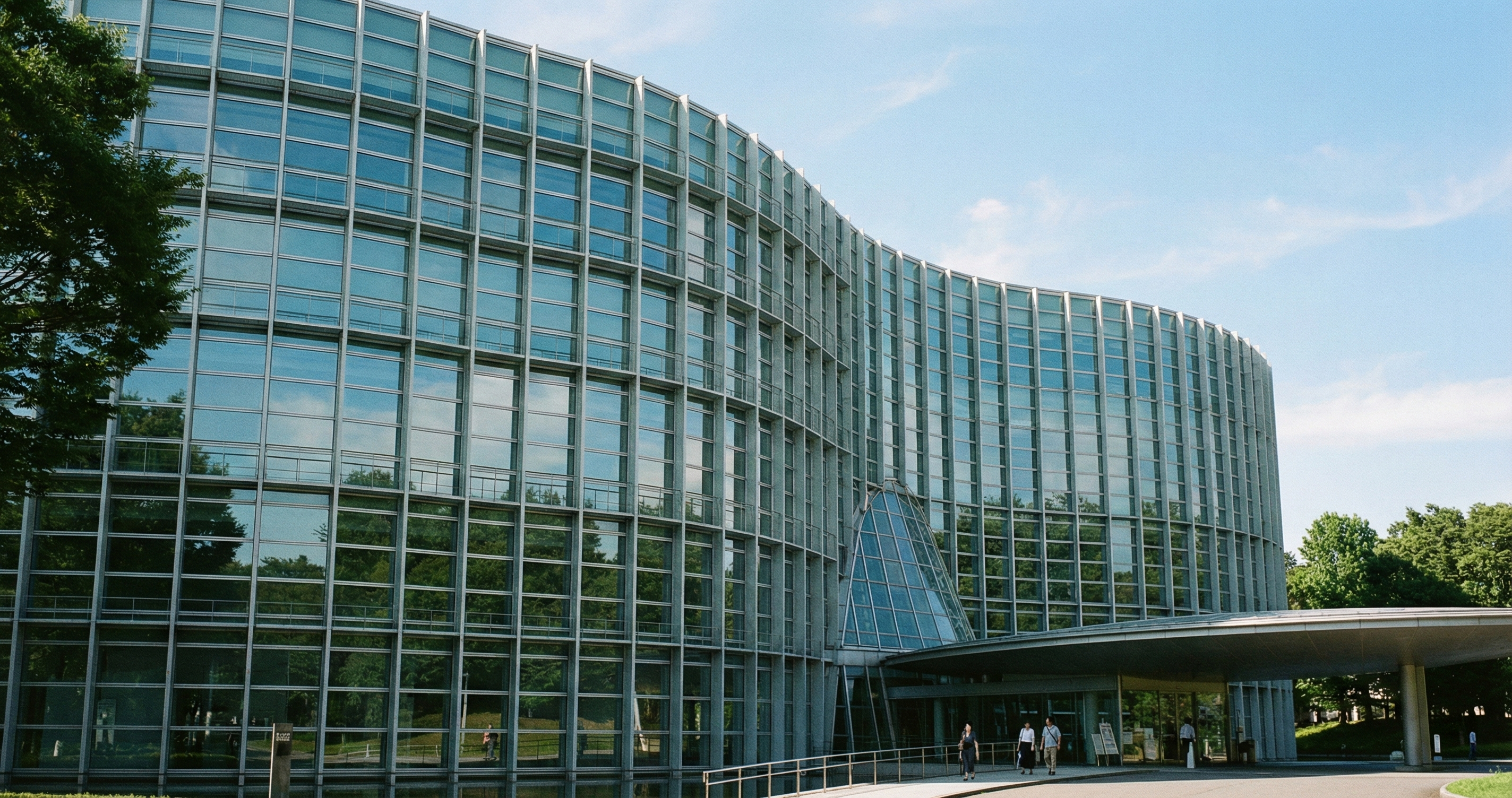 The National Art Center, Tokyo is one of the three major museums in the Art Triangle.
How to Choose
The "Art Triangle" consists of three museums within walking distance:
- Mori Art Museum (Roppongi Hills): Located on the 53rd floor. Focuses on contemporary art, architecture, and fashion. Open late (often until 22:00), making it perfect for night visits.
- The National Art Center, Tokyo: Japan’s largest exhibition space. Stunning wavy glass architecture. No permanent collection; hosts massive rotating exhibitions.
- Suntory Museum of Art (Tokyo Midtown): Focuses on "Art in Life," primarily traditional Japanese art and crafts.
Local Tips
- Triangle Pass: Keep your ticket stub. Some exhibitions offer a "Atro Saving" discount if you present a ticket stub from one of the other two museums.
- Late Nights: The Mori Art Museum is one of the few museums in the world open late. It’s a great pre-dinner activity.
Common Mistakes: Assuming they are always open: The National Art Center is closed on Tuesdays. Suntory is usually closed Tuesdays. Mori is usually open daily but checks the "Mori Art Museum" official website for exhibition changeover periods (where it closes completely).
Mini Recap: For modern art and views, go to Mori. For architecture and scale, go to the National Art Center. For traditional crafts, go to Suntory.
2. Catch the Best Skyline Views (Hills vs. Midtown)
The Verdict: For the classic "Tokyo" photo, Roppongi Hills wins. For a greener, more relaxed vibe, Tokyo Midtown is superior.
Where to Go
- Tokyo City View (Roppongi Hills): An indoor observation deck with floor-to-ceiling windows offering a direct line of sight to Tokyo Tower. There is also an open-air "Sky Deck" on the roof (check operation status as it closes for wind/rain).
- Roppongi Keyakizaka Dori: The street level behind Roppongi Hills offers the famous view of Tokyo Tower framed by trees. In winter, the illumination here is spectacular.
- Tokyo Midtown Garden: A massive green space perfect for daytime picnics. It hosts digital art events in the summer and an ice rink in the winter.
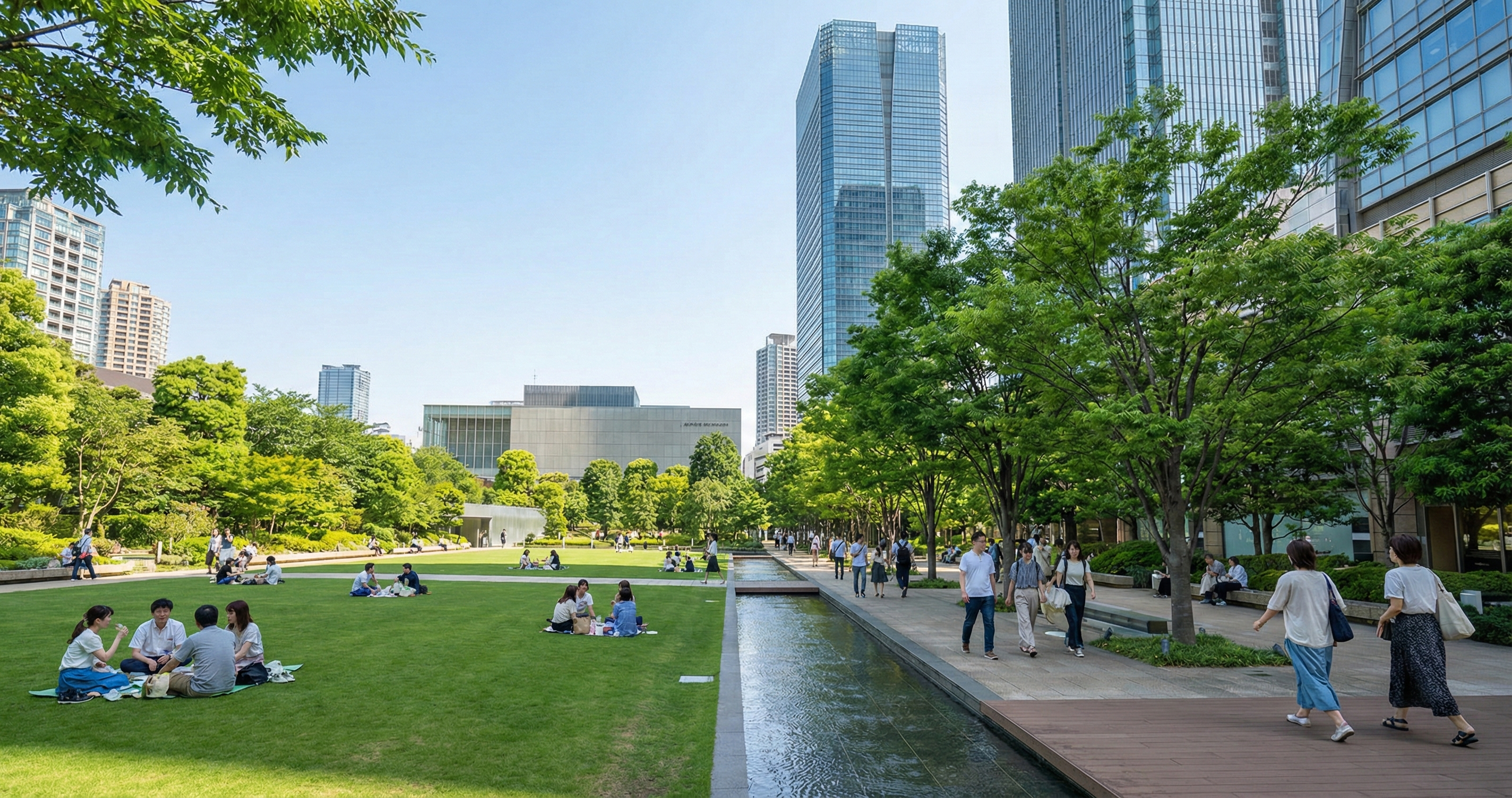 Tokyo Midtown offers a greener, more relaxed alternative to the bustle of Roppongi Hills.
Local Tips
- Sunset Timing: Arrive at the Tokyo City View observation deck 45 minutes before sunset to see the city transition from day to night.
- Free Views: The lobby of the Ritz-Carlton in Midtown (45th floor) has nice views, but it is a hotel space—be respectful.
Common Mistakes: Ignoring Weather: The Sky Deck (Roppongi Hills rooftop) strictly prohibits tripods and hats, and closes immediately in bad weather. Always check the ground-floor signage before paying for the rooftop add-on.
3. Nightlife: Clubs, Bars, and Safety
The Verdict: Roppongi has the highest concentration of foreigner-friendly clubs in Tokyo, but it requires "street smarts."
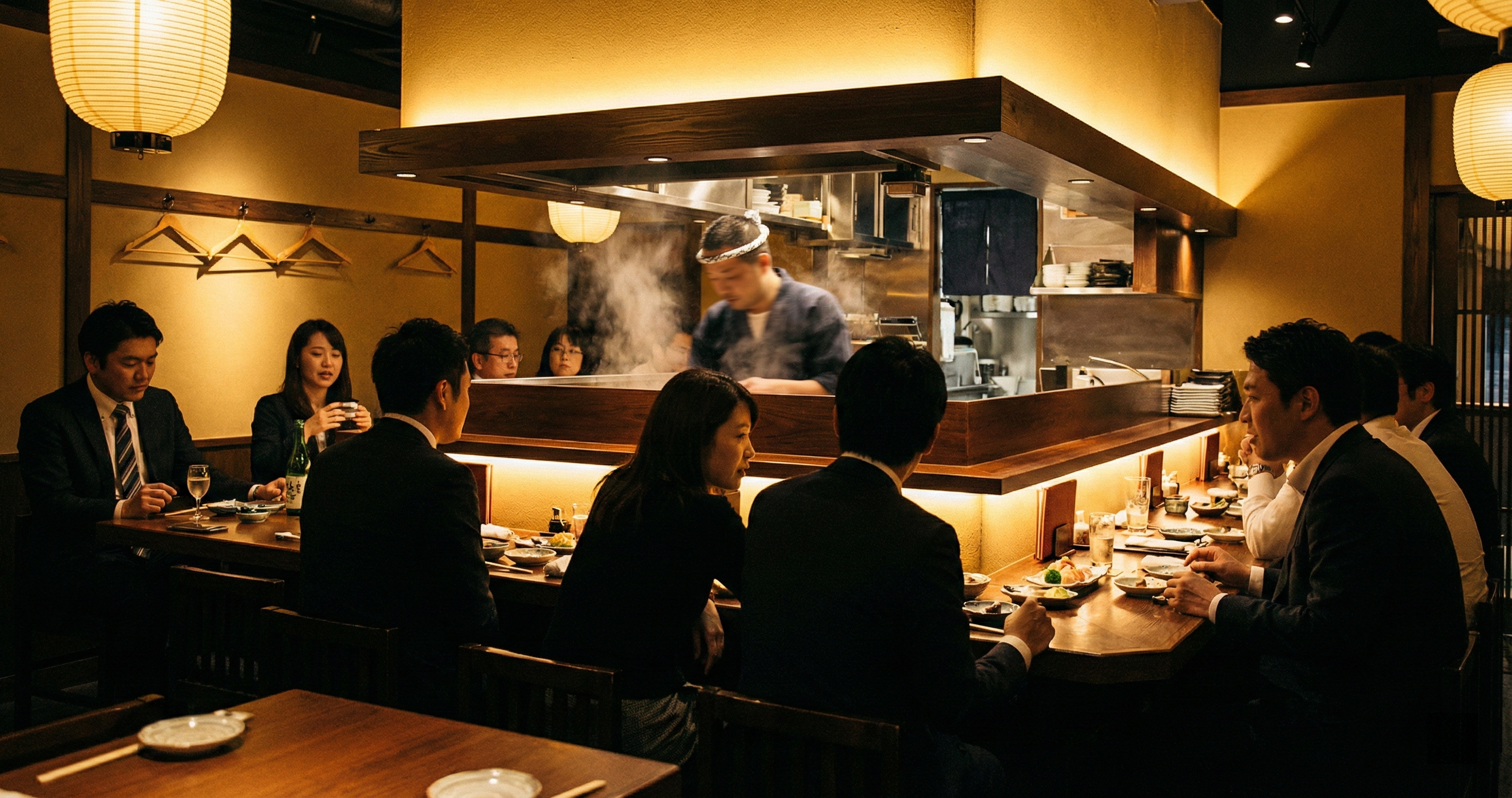 Izakayas provide a relaxed start to the evening before heading to clubs.
Safe Spots vs. Traps
- Clubs: Famous mega-clubs like V2 Tokyo, Jumanji 55, and SEL OCTAGON are legitimate, secure, and popular. They enforce dress codes and ID checks.
- Dining: The "Yokocho" (alleyways) near the station are packed with Izakayas. Gonpachi (Nishi-Azabu) is famous as the "Kill Bill" restaurant and is a short walk or taxi ride away.
- The "Don Quijote" Hub: The massive Don Quijote store in Roppongi is a landmark. The area around it is the center of nightlife.
Critical Safety Warning
Do not follow street touts (kyakuhiki). In Roppongi, you will be approached by men on the street promising "Cheap drinks," "Nice girls," or "No cover charge."
- Rule: Ignore them completely. Do not make eye contact.
- Risk: These often lead to "bottakuri" bars where you may be drugged or charged exorbitant fees (e.g., $3,000 USD for a few drinks). Stick to places you have researched or booked online.
Common Mistakes: Forgetting ID: Japanese clubs are strict. No physical Passport/Zairyu Card = No Entry. Photos of IDs are rarely accepted.
Mini Recap: Stick to well-known clubs and researched restaurants. Ignore the street hustlers entirely.
Gappy Helps
Roppongi’s nightlife options can be overwhelming, and safety is a genuine concern for first-timers. If you aren't sure which bar is safe or want to book a restaurant with a great view without the hassle, chat with Gappy. We can suggest verified local spots and handle the reservation instantly.
Get personalized nightlife and dining recommendations →
4. Transport & Logistics: Getting Home
The Verdict: Roppongi is centrally located, but getting home after midnight is difficult if you miss the train.
Navigating the Station
- Hibiya Line (H): Best for Ginza, Ueno, Ebisu.
- Oedo Line (E): Best for Shinjuku, Tsukiji. Note: The Oedo line platform is extremely deep underground; allow 10 minutes just to get from the street to the train.
The "Last Train" Struggle
- Last trains typically leave around 0:00 - 0:20 AM. Check apps like Google Maps or Navitime strictly.
- Taxi Shortage: On Friday and Saturday nights, catching a taxi in Roppongi is a battle. Apps (Uber/GO) often surge or show no availability.
- The Alternative: If you miss the train and can't find a taxi, many people wait until 5:00 AM for the first train at a 24-hour restaurant, Karaoke (Karaoke Kan/Big Echo), or an internet cafe.
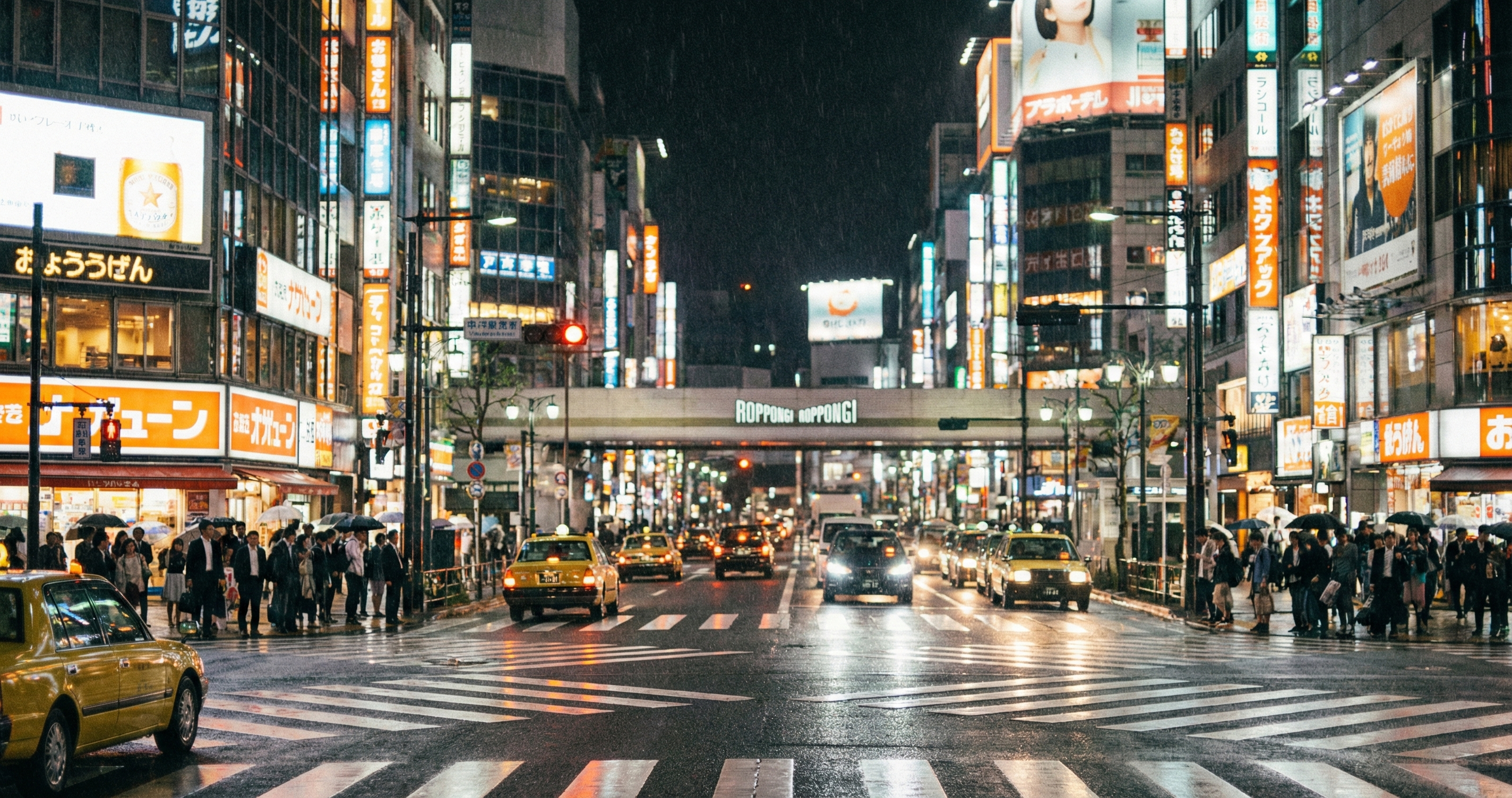 Roppongi Crossing is the central landmark for navigation.
Common Mistakes: Underestimating the station size: Using the wrong exit can put you 15 minutes away from your destination.
- Exit 1C: Directly connected to Roppongi Hills (Concourse).
- Exit 8: Direct to Tokyo Midtown.
- Exit 3/5: Closest to the chaotic nightlife intersection (Roppongi Crossing).
Next Steps
Ready to experience the dual nature of Roppongi?
- Check Exhibition Schedules: Look up Mori Art Museum and National Art Center to see what is on.
- Decide Your Night Strategy: Choose a specific club or restaurant before you arrive to avoid wandering aimlessly.
- Plan Your Route: If you want a custom itinerary that connects an art viewing with a dinner spot near the station, ask Gappy to generate a route for you.
Start planning your Roppongi itinerary →
FAQs
Is Roppongi safe for tourists at night?
Generally yes, but with a major caveat. The streets are safe from violent crime, but financial scams are common. The golden rule is to never follow street touts (people soliciting customers on the street) to their bars. Stick to known venues like Roppongi Hills, Midtown, or reputable clubs like V2 or Jumanji. If you follow this rule, Roppongi is safe.
What is Roppongi famous for?
Roppongi is famous for its "dual nature." By day, it is a high-end business and cultural district home to the "Art Triangle" (Mori Art Museum, National Art Center, Suntory Museum) and luxury shopping. By night, it transforms into Tokyo's most international nightlife district, packed with clubs, bars, and late-night dining options popular with expats and tourists.
How much time should I spend in Roppongi?
For a full experience, plan for 4 to 6 hours. Arrive in the late afternoon (around 15:00) to visit one art museum (1.5 hours) and explore Roppongi Hills or Midtown shops. Catch the sunset at the Tokyo City View observation deck, then have dinner. If you plan to go clubbing, you can stay until the first train (around 5:00 AM).
Is Roppongi good for families with kids?
Yes, during the day. Roppongi Hills and Tokyo Midtown are very family-friendly. Midtown has a large lawn (Hinokicho Park) great for toddlers. Roppongi Hills has a movie theater and the observation deck is stroller-friendly. However, the nightlife area (near Roppongi Crossing) is not recommended for children after 20:00 due to the crowds and adult nature of the businesses.
Which is better: Roppongi Hills or Tokyo Midtown?
It depends on your goal. Roppongi Hills is better for first-timers; it has the Mori Art Museum, the iconic spider sculpture (Maman), and the best Tokyo Tower views. Tokyo Midtown is more relaxed, upscale, and greener, connecting to a beautiful park. Midtown is better for a quiet luxury shopping stroll; Hills is better for sightseeing and energy.
Can I walk from Roppongi to Tokyo Tower?
Yes, it is a pleasant walk. It takes about 15 to 20 minutes walking from Roppongi Station. The route takes you past the Russian Embassy and towards the Zojoji Temple area. It is a downhill walk from Roppongi, making it easier than walking to Roppongi. However, taking the subway (Oedo Line) to Akabanebashi is faster if you are tired.
Are museums in Roppongi expensive?
Prices vary by exhibition. Generally, special exhibitions at the Mori Art Museum or National Art Center cost between 1,500 JPY and 2,200 JPY per adult. Some smaller galleries inside the National Art Center are free. Discounts are often available for students or seniors with valid ID. Always check the official museum websites for current pricing.
Written by