

Things to Do in Tokyo by Area: Complete Guide
Gappy Local Expert Team
TL;DR
Tokyo spans 2,194 square kilometers divided into distinct areas with different atmospheres, attractions, and transit accessibility—choosing which areas to prioritize based on your interests, available time, and travel style prevents wasting hours on transit between scattered locations.
- Effective area selection considers three factors: your primary interests (traditional culture, modern youth culture, food scenes, shopping, nightlife), your time constraints (day trips allow 1-2 area deep dives, week-long stays enable comprehensive coverage), and practical logistics (station connections, crowd patterns, rain backup options).
- Major Tokyo areas serve different purposes: Shibuya/Harajuku for youth culture and fashion, Shinjuku for transport hub and nightlife, Asakusa for traditional temples and history, Ginza for luxury shopping, Akihabara for tech and anime.
Quick Checklist:
- Understand Tokyo's geographic scale—areas are 30-60 minutes apart.
- Match areas to your primary interests rather than trying to see everything superficially.
- Check official area websites and tourism pages for current attraction operating hours.
- Use JR Yamanote Line as your mental map for understanding area positions.
- Plan 1-2 areas maximum per day to avoid exhausting transit time.
- Verify accommodation location's proximity to areas you'll visit most frequently.
- Build rain alternatives into each area plan.
Intro
Tokyo doesn't function as a single unified destination but rather as a collection of distinct neighborhoods and districts, each with unique character, attractions, and practical considerations. The difference between spending your day in Shibuya versus Asakusa isn't just about different sights—it's entirely different atmospheres, demographics, price points, and experiences. Choosing which Tokyo areas to prioritize, how to sequence them efficiently, and where to base yourself determines whether you spend 3 hours daily on trains bouncing between scattered attractions or 90% of your time actually experiencing Tokyo.
This guide explains how Tokyo's major areas differ, provides frameworks for choosing areas matching your interests and timeframe, and links to detailed neighborhood guides for deeper planning. Understanding area characteristics before booking accommodation or building daily itineraries prevents the common mistake of treating Tokyo as if Asakusa and Shibuya are "nearby" when they're actually 40+ minutes apart during non-rush hours.
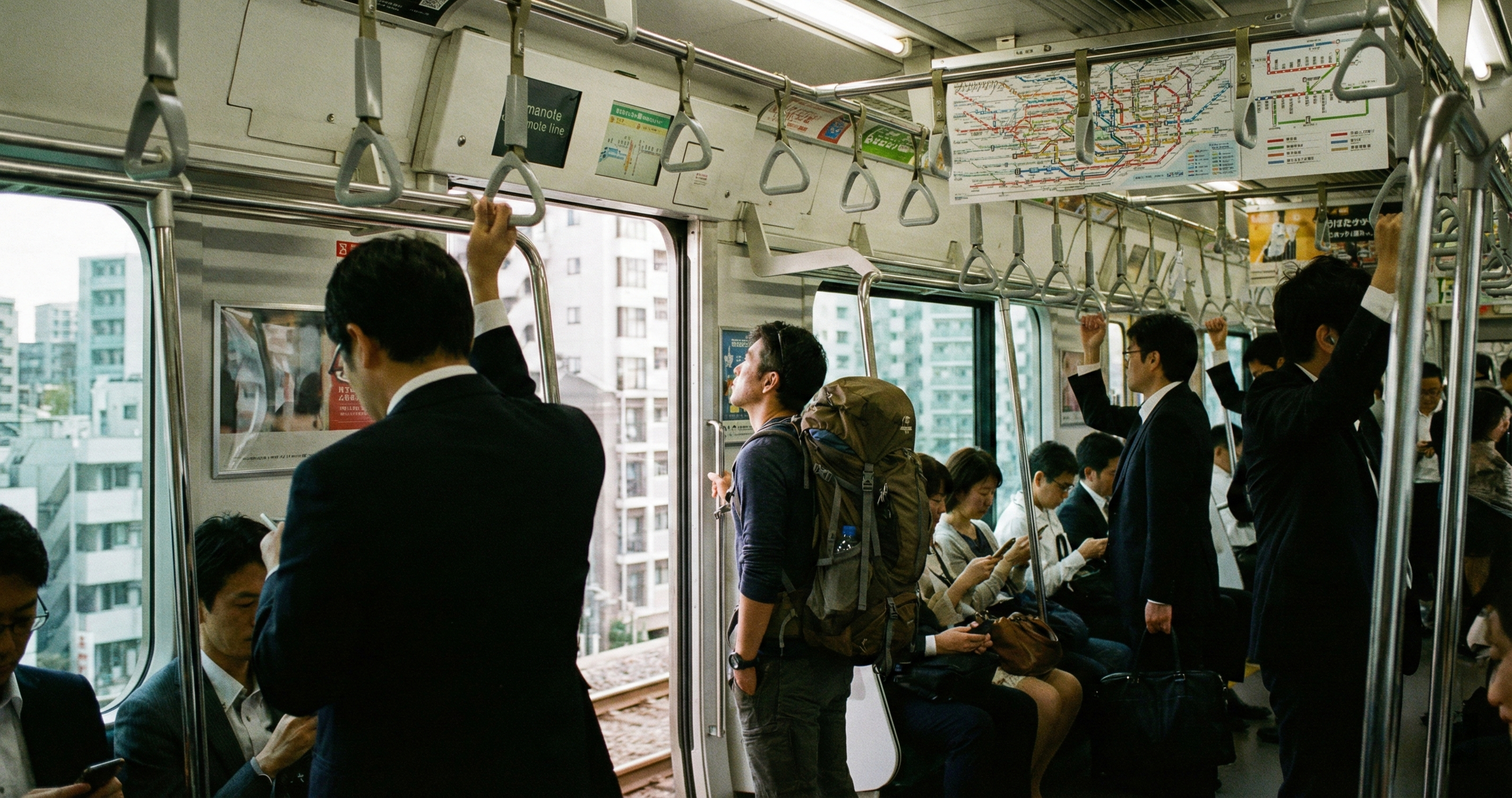 Tokyo's scale deceives visitors; understanding transit connections between districts is critical.
How to Choose Tokyo Areas: Decision Framework
Conclusion: Choosing Tokyo areas effectively requires matching three variables—your primary interests against area specializations, your available time against geographic clustering possibilities, and your travel style against each area's atmosphere and logistics—with this framework preventing the common mistake of trying to see everything resulting in exhausted dissatisfaction.
Tokyo's scale deceives visitors who look at maps assuming distances are walkable or quick train rides. In reality, Asakusa to Shibuya requires 35-45 minutes via train, Tokyo Station to Harajuku is 20-25 minutes, and these times assume you know exactly which platform and exit to use without getting lost in station complexes.
Variable 1: Interest-based area matching
- Traditional culture & temples: Asakusa (Senso-ji Temple), Ueno (Museums, park), Yanaka.
- Modern youth culture & fashion: Shibuya (crossing, Center Gai), Harajuku (Takeshita Street), Shimokitazawa.
- Business & nightlife: Shinjuku (Kabukicho, Omoide Yokocho), Roppongi (international nightlife).
- Luxury shopping & established brands: Ginza, Marunouchi/Tokyo Station.
- Tech, anime & otaku culture: Akihabara, Nakano Broadway.
- Residential & local atmosphere: Kichijoji, Nakameguro, Daikanyama.
Variable 2: Time-based clustering strategies
- Single day (first-time visitor): Choose 1-2 geographically adjacent areas maximum. Example: Morning Asakusa + afternoon Ueno (both eastern), or afternoon Shibuya + evening Harajuku (both western).
- 2-3 days: Cover 3-4 areas grouping by geography. Day 1: Asakusa/Ueno cluster. Day 2: Shibuya/Harajuku cluster. Day 3: Shinjuku/Tokyo Station/Ginza cluster.
- 4-7 days: Add secondary areas (Akihabara, Roppongi, Odaiba) and consider day trips (Nikko, Hakone, Kamakura).
Variable 3: Practical logistics affecting area choice
- Accommodation location determines daily starting points. Staying near Shinjuku Station provides excellent access to all areas via JR Yamanote Line.
- Rush hour dynamics (7-9am, 5-7pm) make certain routes genuinely unpleasant.
- Rain backup options vary by area. Shibuya and Shinjuku have extensive underground complexes; Asakusa and Ueno rely more on outdoor attractions.
Tokyo Areas Overview: Characteristics and Specializations
The table below compares Tokyo's primary tourist areas across key decision factors.
| Area | Primary Appeal | Best For | Atmosphere | Transit Hub | Typical Visit Duration |
|---|---|---|---|---|---|
| Shibuya | Youth culture, shopping, iconic crossing | First-timers, fashion, nightlife | Energetic, crowded, commercial | Shibuya Station (JR/Subway) | 3-4 hours |
| Harajuku | Takeshita Street, Omotesando, Meiji Shrine | Youth fashion, temples, cafes | Trendy, weekend-crowded, varied | Harajuku Station (JR) | 3-5 hours |
| Shinjuku | Transport hub, nightlife, observation decks | Transit connections, entertainment | Busy, neon-lit, overwhelming | Shinjuku Station (JR/Subway) | 2-3 hours or evening |
| Asakusa | Senso-ji Temple, traditional Tokyo | Traditional culture, history | Tourist-heavy, nostalgic | Asakusa Station (Subway) | 2-3 hours |
| Ueno | Museums, park, cherry blossoms | Culture, nature (seasonal) | Relaxed, family-friendly | Ueno Station (JR/Subway) | 3-5 hours |
| Ginza | Luxury shopping, upscale dining | High-end retail, fine dining | Sophisticated, expensive | Ginza Station (Subway) | 2-3 hours |
| Akihabara | Electronics, anime, maid cafes | Tech shopping, otaku culture | Niche, enthusiast-focused | Akihabara Station (JR) | 2-4 hours |
| Roppongi | International nightlife, art museums | Nightlife, contemporary art | Upscale, foreigner-friendly | Roppongi Station (Subway) | Evening primarily |
| Tokyo Station | Imperial Palace, business district | Architecture, gardens, transit | Formal, business-oriented | Tokyo Station (JR/Subway) | 2-3 hours |
Detailed area characteristics
Shibuya (渋谷)
The Shibuya Crossing epitomizes modern Tokyo's frenetic energy. Beyond the crossing, Center Gai street offers youth-oriented shopping, restaurants, and nightlife.
- Atmosphere: Constantly crowded. Young people dominate the demographic.
- Transit connections: Major hub with JR Yamanote Line, multiple subways. 200+ exits create confusion—allow extra time.
Harajuku (原宿)
Takeshita Street's narrow pedestrian lane concentrates youth fashion and kawaii culture. Adjacent Omotesando offers upscale shopping. Meiji Shrine provides traditional temple contrast.
- Atmosphere: Weekend Takeshita Street becomes nearly impassable.
- Crowd timing: Weekend 12pm-5pm sees maximum congestion. Visit before 11am or after 6pm.
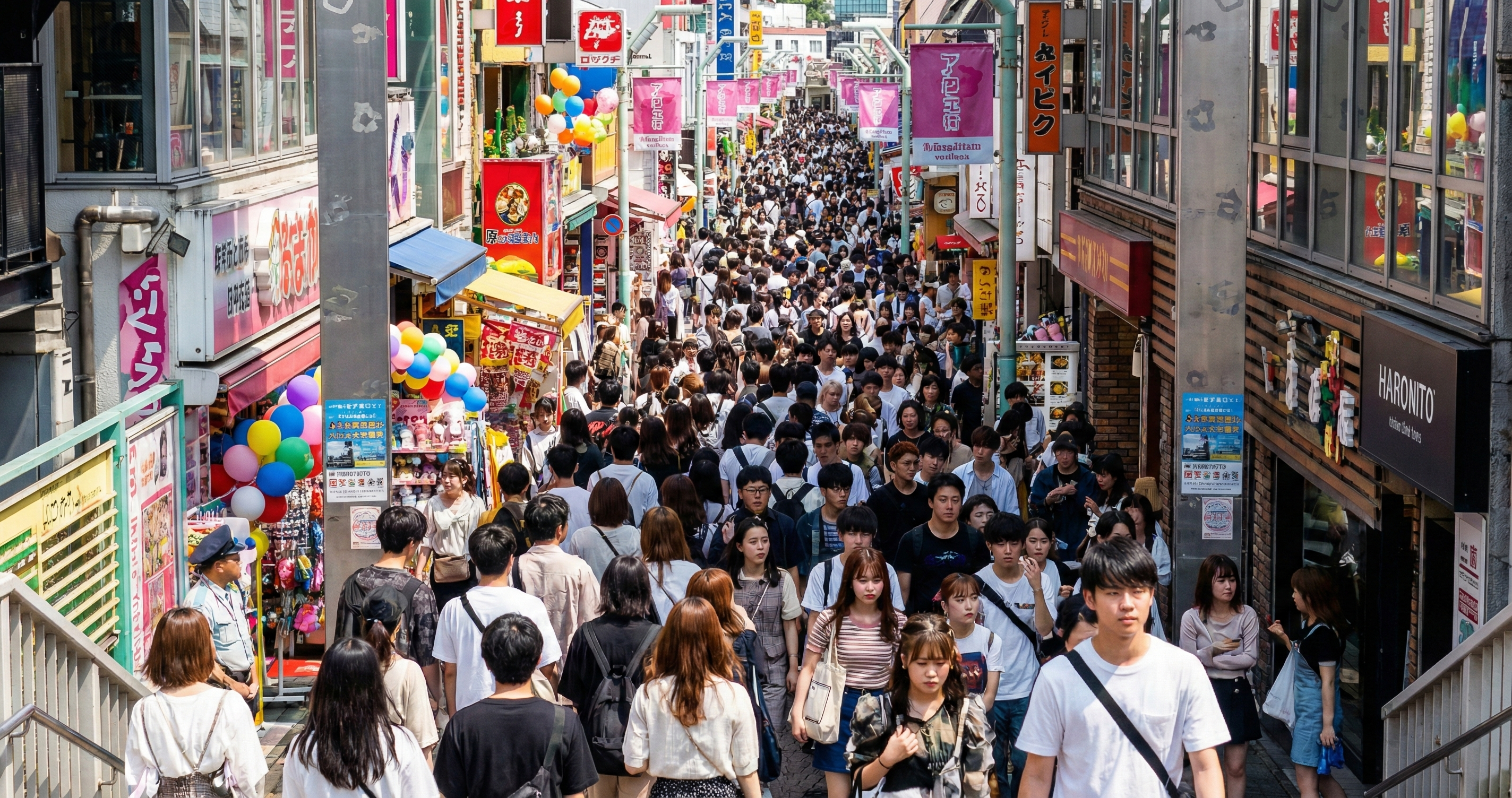 Harajuku's Takeshita Street is a hub of youth culture but can be extremely crowded on weekends.
Shinjuku (新宿)
The world's busiest transport hub. Includes Kabukicho entertainment district, observation decks, and nostalgic alleys like Omoide Yokocho.
- Atmosphere: Overwhelming for first-timers. Neon-lit commercial density.
- Rain alternatives: Massive underground shopping city and department stores make this one of Tokyo's best rainy-day areas.
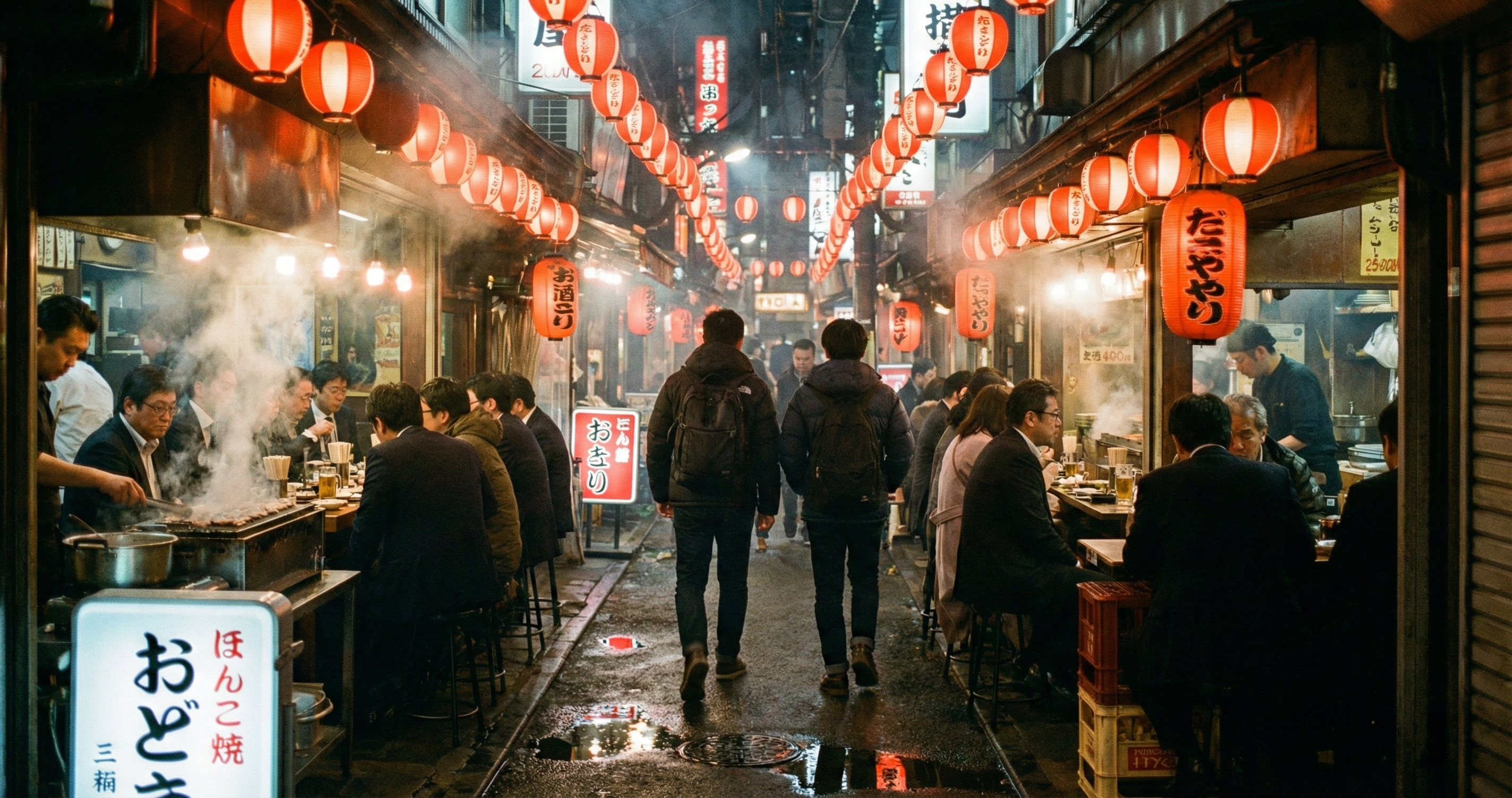 Shinjuku offers distinct experiences like the nostalgic Omoide Yokocho food alley.
Asakusa (浅草)
Senso-ji Temple anchors this traditional district. Nakamise shopping street sells traditional souvenirs.
- Atmosphere: Distinctly "historical Tokyo." Tour groups dominate midday hours.
- Crowd timing: Visit 7-9am for peaceful temple experience, or after 5pm when day-trippers depart.
Ueno (上野)
Combines museums, Ueno Zoo, and park space.
- Atmosphere: More relaxed. Families and cultural tourists dominate.
- Rain alternatives: Multiple museums provide extensive indoor options.
Practical Considerations: Weather, Crowds, and Timing
Conclusion: Area selection should account for weather vulnerability, crowd density patterns, and time-of-day optimal windows.
Weather-based area selection
- Best rainy day areas: Shinjuku (underground shopping), Shibuya (connected complexes), Tokyo Station area (underground malls), Akihabara (indoor shops).
- Poor rainy day areas: Ueno Park, Harajuku (outdoor street), Asakusa (temple grounds), Odaiba.
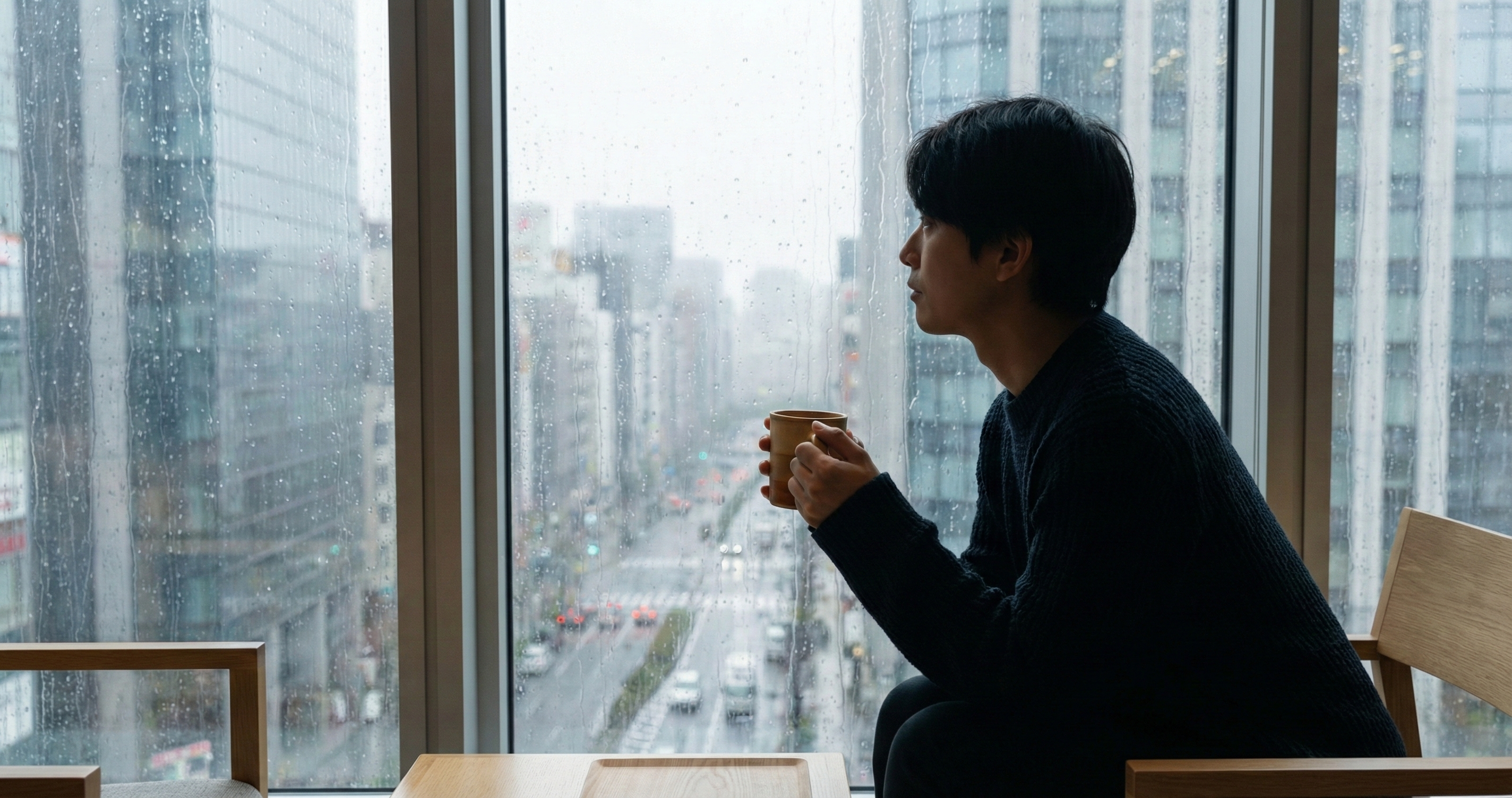 Weather significantly impacts your experience; have indoor-heavy backup plans like Shinjuku or Ginza for rainy days.
Crowd pattern understanding
- Weekend vs. weekday: Major tourist areas (Harajuku, Asakusa) see 50-100% higher crowds on weekends. Business districts (Marunouchi) are quieter on weekends.
- Time-of-day: Most tourist areas peak 12pm-3pm. Early morning (7-9am) is best for temples.
Gappy Helps
Tokyo area selection involves juggling geographic efficiency, interest matching, crowd avoidance, and weather contingencies.
Gappy's area-specific guidance integrates current weather, crowd forecasts, your stated interests, accommodation location, and remaining schedule to recommend which areas to visit when.
Get personalized Tokyo area recommendations based on your interests and schedule → Link to Gappy Tool
FAQs
Where should I stay in Tokyo for sightseeing?
Stay near Shinjuku or Shibuya stations for optimal access to all Tokyo areas via JR Yamanote Line and multiple subway connections. Shinjuku provides the most comprehensive transit access with direct routes to every major area, though the surrounding district's commercial intensity can feel overwhelming. Shibuya offers similar connectivity with slightly more approachable neighborhood atmosphere. Asakusa positions you well for eastern Tokyo (Ueno, Akihabara) but requires longer transit to western areas.
Which Tokyo area is best for first-time visitors?
Shibuya combines iconic Tokyo imagery (the crossing), accessible transit connections, diverse shopping, youth culture, and evening entertainment making it excellent first-timer base. Alternatively, focus your first Tokyo day on eastern loop (Asakusa for traditional temples → Ueno for parks/museums → Akihabara for tech) providing traditional-to-modern Tokyo spectrum in efficient geographic cluster.
How do I choose an area in Tokyo?
Choose Tokyo areas by matching three factors: (1) Your interests against area specializations—temples and tradition suggest Asakusa/Ueno, youth culture and fashion indicate Shibuya/Harajuku, tech and anime point to Akihabara. (2) Your available time—single days allow 1-2 adjacent areas maximum. (3) Practical logistics—verify accommodation proximity to desired areas, account for weather, and check crowd patterns.
What's the best Tokyo area for nightlife?
Shinjuku's Kabukicho district, Golden Gai alley bars, and Omoide Yokocho izakaya concentration create Tokyo's most diverse nightlife area. Roppongi offers international nightlife atmosphere with foreigner-friendly clubs and upscale bars. Shibuya provides youth-oriented clubs and bars with energetic atmosphere. All three require evening visits (7pm+) as they don't activate during afternoon.
Can I visit multiple Tokyo areas in one day?
Yes, but limit to 2-3 geographically adjacent areas to avoid excessive transit time. Efficient combinations include: Asakusa + Ueno + Akihabara (eastern loop), Shibuya + Harajuku + Shinjuku (western loop), or Tokyo Station + Imperial Palace + Ginza (central cluster). Attempting 4+ areas or geographically scattered combinations wastes 3+ hours on trains.
Which Tokyo areas are best for shopping?
Ginza provides luxury brands and department stores. Harajuku's Takeshita Street offers youth fashion while adjacent Omotesando features upscale international brands. Shibuya concentrates department stores (109, Parco, Hikarie) targeting youth-to-young-adult demographics. Akihabara specializes in electronics and anime goods. Shopping areas vary dramatically by price point and style.
How much time should I spend in each Tokyo area?
Allocate 3-5 hours for major areas (Shibuya, Asakusa, Shinjuku, Harajuku) allowing meaningful exploration without exhausting rush. Specialized interest areas (Akihabara, Ginza) may warrant only 1-2 hours unless deeply interested. Museums within areas require 2-3 hours independently.
Written by