

Things to Do in Shinjuku: Views, Food & Nightlife
Gappy Local Expert Team
TL;DR
Shinjuku functions as Tokyo's busiest transport hub (3.6 million daily passengers) and entertainment district, combining free observation deck views from Tokyo Metropolitan Government Building, traditional food alleys (Omoide Yokocho, Golden Gai), massive underground shopping, and Kabukicho nightlife—but requires station navigation strategy as the complex has 200+ exits across interconnected buildings making first-time orientation genuinely challenging.
The district operates on day/night split personality—daytime focuses on observation decks, department store shopping, Shinjuku Gyoen garden, and business district architecture, while nighttime activates izakaya alleys, Golden Gai bars, Kabukicho entertainment (with tourist trap awareness needed), creating dramatically different atmospheres requiring separate activity planning.
Quick Checklist:
- Master basic Shinjuku Station navigation using major landmarks (East Exit for Kabukicho, West Exit for government building, South Exit for department stores).
- Verify Tokyo Metropolitan Government Building observation deck hours on official website before visiting (free admission but closes for events).
- Plan daytime versus nighttime activities separately—observation decks and parks for day, food alleys and bars for evening.
- Understand Kabukicho safety realities and tout avoidance tactics for evening visits.
- Navigate rush hour (7-9am, 5-7pm) carefully if passing through station.
- Build rain contingency with underground shopping passages and indoor department stores.
- Allow extra time for station navigation—first-time visitors need 15-20 minutes to reach destinations.
Intro
Shinjuku presents Tokyo at maximum intensity—neon-lit skyscrapers crowding narrow streets, 200+ station exits creating underground labyrinth confusion, salary workers flooding izakaya alleys after work, and business district formality coexisting with Kabukicho's red-light reputation three blocks away. This density and complexity means first-time visitors often waste 30-45 minutes lost in the station, skip the free observation deck because they can't find it, or fall into tourist traps in entertainment districts they navigated unprepared.
Understanding Shinjuku requires approaching it as multiple overlapping districts rather than single unified area—the west side's skyscrapers and government buildings contrast with east side's entertainment chaos, while underground passages create entirely separate shopping dimension beneath surface streets. This guide provides station navigation fundamentals, day versus night activity separation, safety strategies for nightlife areas, and practical routing preventing the disorientation and frustration that characterize unsuccessful Shinjuku visits.
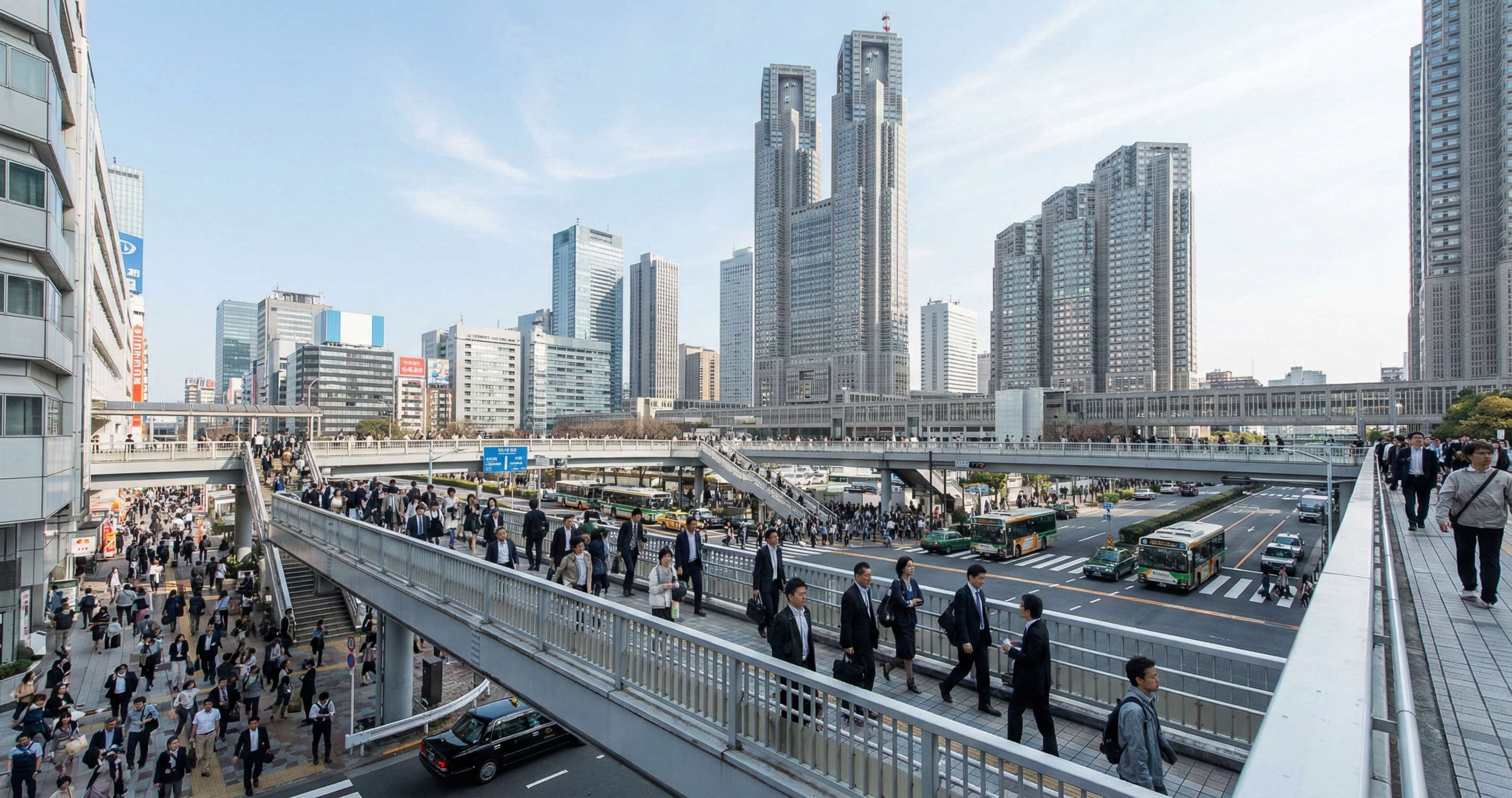 Shinjuku Station processes 3.6 million passengers daily through 200+ exits
What Makes Shinjuku Worth Visiting: Understanding the District
Conclusion: Shinjuku appeals as Tokyo's ultimate urban intensity experience combining free world-class observation deck views, authentic salary worker izakaya culture in preserved nostalgic alleys, massive shopping infrastructure, and 24-hour entertainment district—but doesn't function as relaxed cultural sightseeing like temples or peaceful parks, instead offering contemporary Tokyo urbanism at maximum density and energy.
This makes Shinjuku essential for visitors wanting modern Tokyo immersion but potentially overwhelming for those seeking traditional calm or navigational simplicity. Honest assessment of your comfort with crowds, complexity, and nightlife atmosphere determines whether Shinjuku becomes Tokyo highlight or frustrating ordeal.
What defines Shinjuku's character
- Shinjuku Station's overwhelming scale as world's busiest train station creates the district's fundamental challenge and character. The station isn't single unified structure but rather interconnected buildings housing JR lines, multiple private railways (Odakyu, Keio), Tokyo Metro lines, and massive underground shopping passages.
- West side skyscraper district contains Tokyo Metropolitan Government Building (offering free observation decks), luxury hotels, business offices, and modern urban landscape.
- East side entertainment and shopping centers on Kabukicho (歌舞伎町), Japan's largest red-light and entertainment district, alongside massive department stores (Isetan, Takashimaya, Lumine).
- Traditional food alley preservation amid modern development makes Shinjuku unique. Omoide Yokocho and Golden Gai maintain 1950s-1960s era atmosphere with tiny izakaya bars.
- Underground city scale beneath Shinjuku Station contains kilometers of shopping passages connecting department stores, subway stations, and underground malls.
- Shinjuku Gyoen National Garden provides 58-hectare green space oasis offering escape from urban intensity.
Navigating Shinjuku Station: Exits, Meeting Points, and Transit
Conclusion: Mastering Shinjuku Station navigation requires understanding the four major exit zones (East, West, South, New South), using landmark-based orientation rather than attempting to memorize 200+ exits, and allowing 15-20 minutes for first-time navigation between platforms and surface destinations.
Four major exit zones define navigation
| Exit Zone | What's There | When to Use | Key Landmarks |
|---|---|---|---|
| East Exit | Kabukicho, Isetan, entertainment district | Nightlife, Kabukicho dining, evening activities | Godzilla statue visible from street |
| West Exit | Skyscraper district, Tokyo Met. Gov't Building | Observation decks, business district, morning/afternoon | Underground passage to gov't building |
| South Exit | Takashimaya Times Square, highway buses | Department store shopping, bus connections | Large terrace area visible above station |
| New South Exit | Newer development, less crowded | Avoiding main concourse crowds | Modern building facades |
Step-by-step navigation strategy
- Identify your destination's general zone before leaving your train platform (Kabukicho → East, Observation deck → West).
- Follow large overhead signs showing these major zones rather than small specific exit numbers.
- Use underground passages strategically in rain or summer heat.
- Surface and orient before walking to final destination.
Meeting point recommendations
DON'T say "meet at Shinjuku Station". Specify exactly:
- East Exit: Godzilla Head (Toho Cinema building)
- South Exit: Southern Terrace (Large open elevated terrace area)
- West Exit: Shinjuku Station West Exit Rotary (Above ground bus terminal)
Daytime Shinjuku: Observation Decks, Shopping, and Parks
Conclusion: Daytime Shinjuku (roughly 9am-6pm) focuses on Tokyo Metropolitan Government Building's free observation decks, massive department store shopping (Isetan, Takashimaya, Lumine), Shinjuku Gyoen garden escape from urban density, and underground passage exploration.
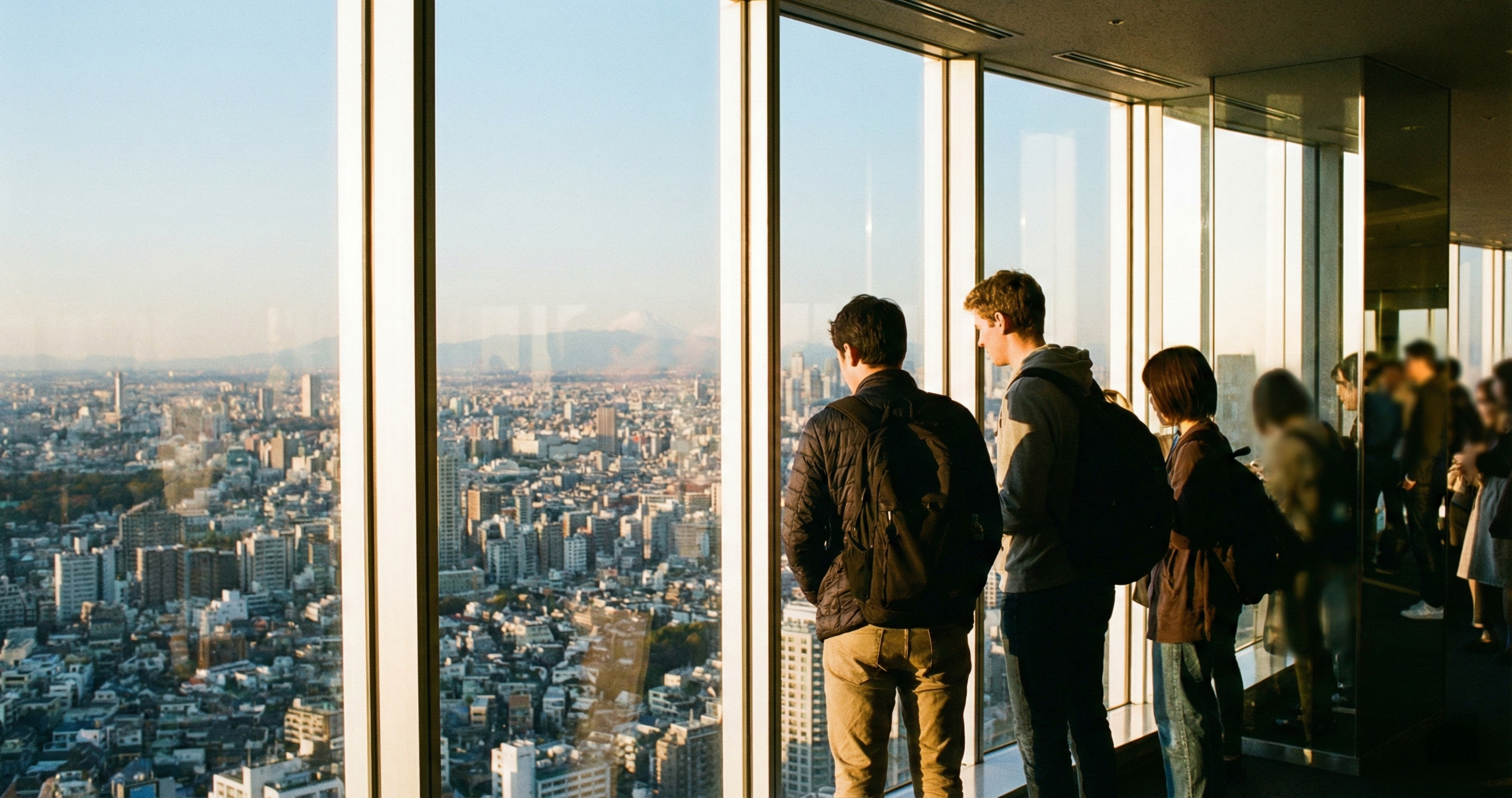 Free observation decks in Tokyo Metropolitan Government Building provide 202-meter-high city views
Tokyo Metropolitan Government Building Observation Decks (Free Entry)
- The opportunity: Free public observation decks on 45th floor (202 meters high) providing 360-degree Tokyo views including Mt. Fuji on clear days.
- Access route: From Shinjuku Station West Exit, follow underground passage signs for 都庁 (Tocho). Approx 10 mins.
- Best timing: Early morning (9:30-11am) for clearest air, or sunset.
Department Store Shopping
- Isetan (伊勢丹): Famous for basement food hall (depachika) showcasing premium Japanese foods.
- Takashimaya Times Square: Large complex including Tokyu Hands and Kinokuniya bookstore.
- Lumine: Targets younger demographics with contemporary fashion brands.
Shinjuku Gyoen National Garden
58-hectare garden combining Japanese traditional, English landscape, and French formal garden styles.
- Access: Shinjuku Gate closest to Shinjuku Station (10-minute walk southeast from South Exit).
- Note: Closes Mondays. Alcohol prohibited.
Nighttime Shinjuku: Food Alleys, Golden Gai, and Entertainment
Conclusion: Nighttime Shinjuku (6pm-late night) transforms into Tokyo's most intense entertainment and dining district combining traditional izakaya alleys, massive Kabukicho entertainment zone, and countless restaurants.
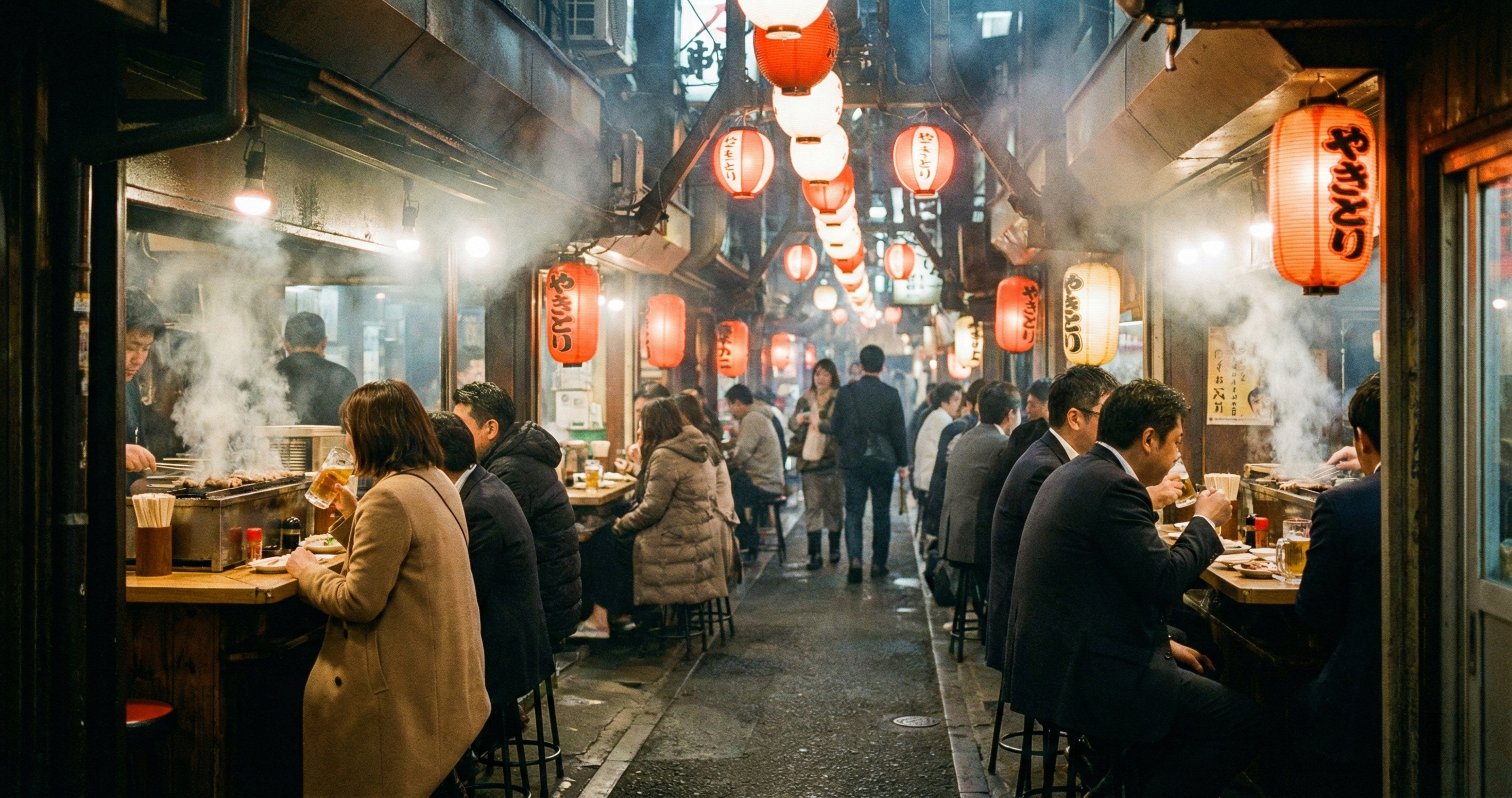 Omoide Yokocho preserves 1950s-era izakaya alley atmosphere amid modern Shinjuku development
Omoide Yokocho (思い出横丁 - "Memory Lane")
Narrow alley network northwest of JR Shinjuku Station containing approximately 60 tiny izakaya restaurants and yakitori stands operating in wooden structures.
- What to expect: Extremely small establishments, smoke-filled atmosphere, authentic yakitori and motsu nikomi.
- Practical tips: Some shops have seating charges (otoshi). Cash preferred.
Golden Gai (ゴールデン街)
Six narrow alleys east of Kabukicho containing roughly 200 tiny bars, each seating 5-10 people maximum.
- Distinctions: More bar-focused than Omoide Yokocho. Often charge cover fees.
- Navigation: Look for bars with "English OK" signs or visible pricing.
Kabukicho and Safety Considerations
Japan's largest red-light and entertainment district. Safe from violent crime, but risks include financial scams and aggressive touts.
- How to avoid scams: Decline aggressive street recruiters (touts). Verify complete pricing before entering. Stick to main well-lit streets.
- Solo female travelers: Generally safe with awareness. Avoid narrow side alleys late night.
Practical Considerations: Safety, Crowds, and Weather
- Rush Hour: Avoid passing through Shinjuku Station during 7-9am and 5-7pm weekdays if possible.
- Weather: In rain, use underground passages connecting West Exit to Gov't Building and all major department stores.
- Safety: Violent crime is rare. Main risk is financial scams in nightlife districts. Trust your instincts and leave if a situation feels uncomfortable.
Gappy Helps
Gappy's Shinjuku guidance accounts for your current location within the station complex, time of day, and interest priorities to recommend optimal routing and specific establishments.
Get personalized Shinjuku navigation and activity recommendations → Link to Gappy Tool
FAQs
What is Shinjuku known for?
Shinjuku is known for operating the world's busiest train station (3.6 million daily passengers with 200+ exits), free observation deck views from Tokyo Metropolitan Government Building twin towers, traditional izakaya food alleys (Omoide Yokocho and Golden Gai preserving 1950s-60s atmosphere), Kabukicho entertainment district (Japan's largest red-light area), massive department stores, and west-side skyscraper district creating modern Tokyo skyline.
Is Shinjuku safe at night?
Shinjuku is safe at night regarding violent crime—muggings, assaults, and street crime are extremely rare even in Kabukicho red-light district. Primary risks are financial scams (overcharging at tourist trap establishments, aggressive touts for catch services, unclear pricing) rather than physical danger. Avoid following street recruiters, verify complete pricing before entering establishments, and stay on main well-lit streets.
What is the best observation deck in Shinjuku?
Tokyo Metropolitan Government Building observation decks (North and South Observatories on 45th floor, 202 meters high) offer best value with free admission providing 360-degree Tokyo views including Mt. Fuji on clear days. Verify current operating hours on the official website before visiting. Best timing: early morning (9:30-11am) for clear air or sunset for city lights transition.
How do I navigate Shinjuku Station?
Navigate Shinjuku Station using four major exit zones rather than memorizing 200+ specific exits: East Exit for Kabukicho and entertainment, West Exit for Tokyo Metropolitan Government Building and skyscrapers, South Exit for Takashimaya and department stores, New South Exit for less crowded alternative. Follow large overhead signs showing these zones rather than small numbered exit signs.
What to do in Shinjuku during the day?
Visit Tokyo Metropolitan Government Building free observation decks, explore department store shopping at Isetan (famous basement food hall), Takashimaya, or Lumine buildings, visit Shinjuku Gyoen National Garden (closed Mondays), browse underground shopping passages for weather-protected retail, or photograph west-side skyscraper district architecture.
Where should I eat in Shinjuku?
Eat at Omoide Yokocho (northwest of station near West Exit) for traditional izakaya atmosphere with 60 tiny establishments serving yakitori. Try department store restaurants in Isetan, Takashimaya, or Lumine for mid-range predictable dining. Visit Golden Gai for bar culture (research specific tourist-welcoming bars beforehand). Avoid aggressive street touts in Kabukicho.
How long should I spend in Shinjuku?
Spend 3-4 hours in Shinjuku for daytime observation deck visit, selective shopping, and casual exploration, or 2-3 hours for evening dining and limited nightlife. Comprehensive day-to-night experience visiting both observation decks and evening food alleys warrants 5-6 hours split between afternoon and evening visits.
Written by