

Japan Autumn Foliage Forecast : Best Time
Gappy Local Expert Team
Japan Autumn Foliage Forecast 2024: When & Where to See Koyo
TL;DR:
- Japan's autumn foliage season (koyo) progresses from north to south between September and December, opposite to spring's cherry blossom front, with official forecasts released starting in September each year.
- Official forecasts from the Japan Meteorological Corporation and japan-guide.com should be checked starting in early September for current-year predictions, as timing varies 1-2 weeks annually based on summer heat and autumn temperatures.
- Peak viewing windows typically last 1-2 weeks per location before leaves fall, requiring more precise timing than cherry blossom season which offers slightly longer viewing periods.
Quick Checklist:
- Monitor official koyo forecasts from japan-guide.com and JMC starting September for 2024 predictions.
- Understand the north-to-south progression: Hokkaido (late September-October) → Tohoku (October) → Kanto/Kansai (November) → Kyushu (late November-early December).
- Book accommodations 2-3 months ahead for popular areas like Kyoto during November peak season.
- Check altitude variations within regions as mountain areas color 2-3 weeks before lowland cities.
- Plan for weather variability as rain and wind accelerate leaf drop reducing viewing windows.
- Download Gappy to adjust plans based on real-time foliage reports during your trip.
- Consider weekday visits to popular spots like Kyoto temples to avoid weekend crowds.
Introduction
Japan's autumn foliage season rivals cherry blossoms for natural spectacle, transforming mountains, temple gardens, and city parks into landscapes of crimson, gold, and orange. But unlike the sakura front's predictable south-to-north progression, autumn's koyo front moves in reverse—starting in Hokkaido's mountains in late September and reaching southern Kyushu by early December as temperatures gradually cool across the archipelago.
Timing a koyo trip requires understanding this geographical progression and monitoring annual forecasts that account for each year's specific weather patterns. A hot summer can delay color change by 1-2 weeks; an early cold snap can accelerate it by the same margin. The peak viewing window at any single location lasts just 1-2 weeks before wind and rain strip the leaves, making forecast accuracy crucial for trip planning. This guide explains how Japan's autumn foliage season works and where to find reliable 2024 timing information as the season approaches.
How Japan's Autumn Foliage Front Works
Japan's autumn foliage front (koyo zensen) progresses from north to south and from high to low elevations as temperatures cool, moving opposite to spring's cherry blossom front and spanning approximately three months from late September through early December across the archipelago.
The koyo front's reverse directionality compared to sakura creates different planning dynamics. Spring's cherry blossom front follows warming temperatures northward as winter releases its grip. Autumn's foliage front follows cooling temperatures southward as summer heat dissipates gradually from north to south. This means Hokkaido peaks first (late September-October), followed by northern Honshu, then central regions, Kansai area, and finally southern Kyushu wrapping up the season in early December.
Understanding color change timing factors:
- Temperature patterns determine when leaves begin changing color and how quickly the transformation occurs. Trees require a combination of shorter daylight hours and cooler temperatures (particularly nighttime lows dropping below 8-10°C) to trigger chlorophyll breakdown that reveals underlying red, orange, and yellow pigments. A hot summer extending into September delays this process; an early autumn cold snap accelerates it.
- Elevation creates micro-seasons within each region. Mountain areas at 1,000+ meters elevation typically color 2-3 weeks before nearby lowland cities at the same latitude. This altitude effect means you can extend your koyo viewing window by starting at high-elevation locations then descending to lower areas as the season progresses—a strategy that works particularly well in regions like Nagano, Nikko, and the Japan Alps.
- Tree species affect both color timing and duration. Maple trees (momiji) produce the dramatic reds Japan's autumn foliage is famous for and typically color mid-season. Ginkgo trees turn brilliant yellow and peak slightly later than maples in most regions. Evergreen conifers provide dark green backdrop contrast year-round. Different species reaching peak at different times creates layered color displays over several weeks in areas with diverse tree populations.
How official forecasts work: The Japan Meteorological Corporation (JMC) and several private weather companies publish koyo forecasts starting in early September, updating them weekly as the season progresses and actual conditions emerge. These forecasts predict when leaves will begin changing color and when peak viewing will occur for hundreds of specific locations across Japan. Early forecasts (September) provide general timing windows; late forecasts (mid-October onward) narrow predictions to specific week ranges.
Japan-guide.com publishes detailed English-language koyo reports throughout the season, combining official forecast data with on-the-ground verification from their network of reporters who visit locations and photograph current conditions. These reports update multiple times per week during October-November peak season, providing the most reliable real-time information for international visitors planning trips.
Local tips for using forecasts effectively:
- Hokkaido's Daisetsuzan mountains serve as Japan's first koyo indicator, typically coloring in late September—when this happens, other regions' timing can be projected based on temperature patterns.
- Kyoto's peak timing (usually mid-to-late November) is the most tracked and predicted location, with daily updates available from multiple sources during the November season.
- Mountain resorts and national parks often maintain their own foliage condition pages with daily photo updates more current than centralized forecasts.
- Social media hashtags like #紅葉 (koyo) and location-specific tags provide real-time visitor photos showing actual current conditions versus predicted conditions.
Regional Timing: When Each Area Peaks
Autumn foliage timing in Japan varies by approximately 10-12 weeks from earliest (Hokkaido mountains in late September) to latest (southern Kyushu in early December), with each major region experiencing a 2-4 week peak viewing window that shifts annually based on weather patterns.
Understanding typical regional timing helps with initial trip planning, though verifying current-year forecasts remains essential since year-to-year variation of 1-2 weeks is normal. The table below shows historical average timing patterns, not guaranteed 2024 dates:
| Region | Typical Peak Color | Best Viewing Period | Elevation Notes |
|---|---|---|---|
| Hokkaido (mountains) | Late Sept - Early Oct | Sept 20 - Oct 10 | Daisetsuzan peaks first |
| Hokkaido (lowlands) | Mid-to-Late October | Oct 10 - Oct 31 | Sapporo, Hakodate areas |
| Tohoku | Mid-to-Late October | Oct 15 - Nov 5 | Mountains 2 weeks earlier |
| Nikko / Nagano | Late Oct - Early Nov | Oct 25 - Nov 10 | High variation by elevation |
| Tokyo / Kanto | Late Nov - Early Dec | Nov 20 - Dec 5 | Urban areas latest |
| Kyoto / Kansai | Mid-to-Late November | Nov 15 - Nov 30 | Most tracked forecast location |
| Kyushu (north) | Late November | Nov 20 - Dec 5 | Coastal areas |
| Kyushu (south) | Early December | Nov 25 - Dec 10 | Season ends here |
Best Autumn Foliage Viewing Locations by Region
Japan's most spectacular autumn foliage viewing locations combine natural scenery with cultural elements—mountain gorges, temple gardens, historic villages, and lakeside areas where vibrant foliage reflects in water creating doubled visual impact.
Hokkaido's wilderness koyo: Daisetsuzan National Park offers Japan's earliest and most alpine autumn foliage experience. The Asahidake ropeway provides access to high-altitude terrain where dwarf bamboo, mountain ash, and alpine plants create a tapestry of red, orange, and gold against rocky peaks. Sounkyo Gorge combines autumn colors with dramatic cliff formations and waterfalls.
Tohoku's mountain valleys: Naruko Gorge in Miyagi Prefecture creates a natural theater of autumn color with steep valley walls covered in mixed deciduous forest. Lake Towada and Oirase Stream in Aomori present one of Japan's most photographed autumn scenes—a pristine mountain stream flowing through vibrant forest, with numerous waterfalls and moss-covered rocks creating composition opportunities at every turn.
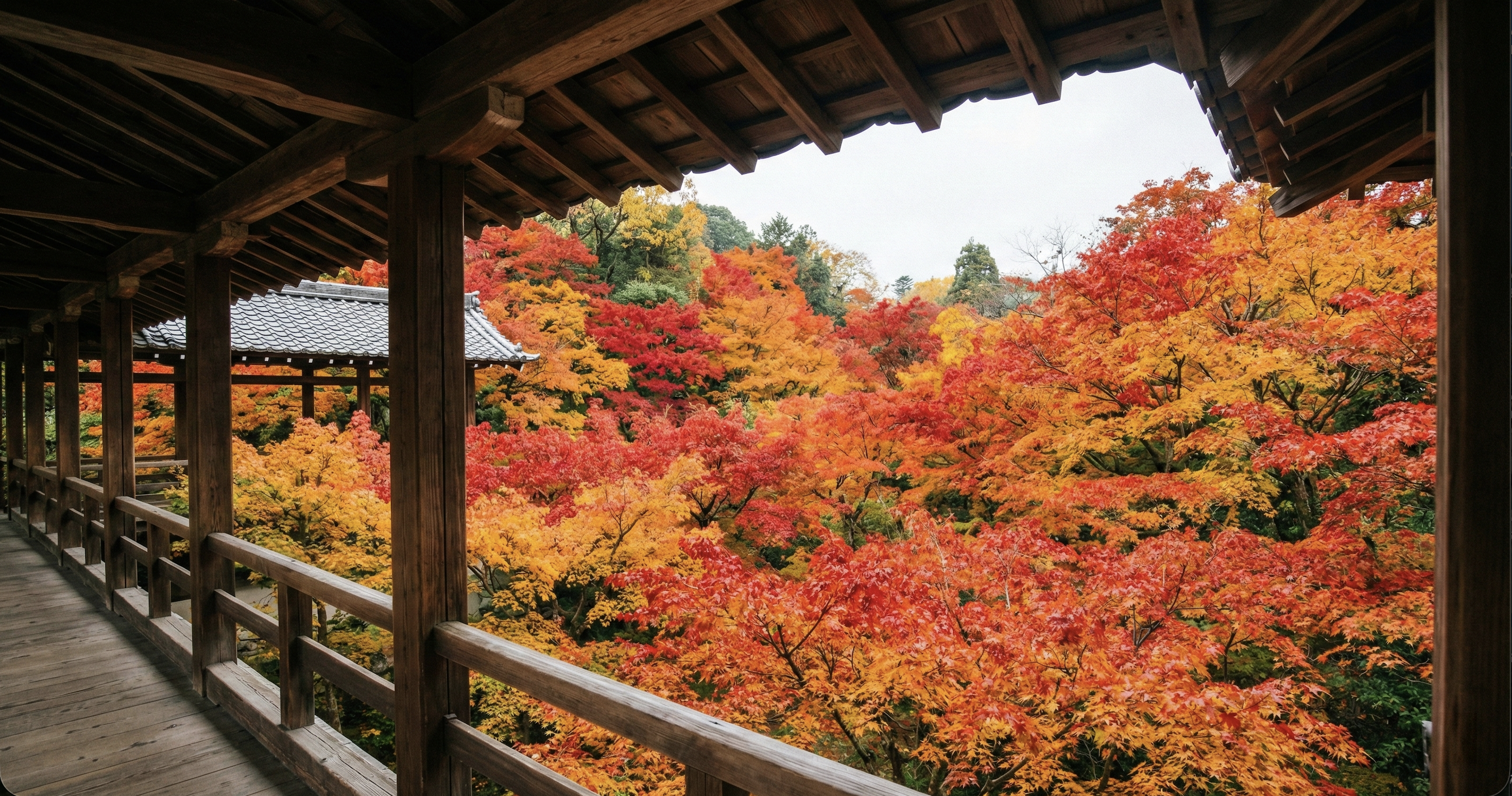
Kyoto's temple garden masterpieces: Kyoto's autumn foliage fame rests on centuries-old temple gardens designed specifically to frame and enhance seasonal color displays. Tofukuji Temple's Tsutenkyo Bridge creates the most photographed Kyoto koyo scene—visitors look down from the bridge onto a sea of maple tree crowns in brilliant red. Kiyomizudera Temple's illuminated night viewing provides different atmosphere than daytime foliage appreciation.
Photography Tips and Weather Considerations
Successful autumn foliage photography in Japan requires managing variable weather conditions, understanding optimal light timing, and working around crowds at popular locations—all while accepting that peak color windows are shorter and less predictable than cherry blossom season.
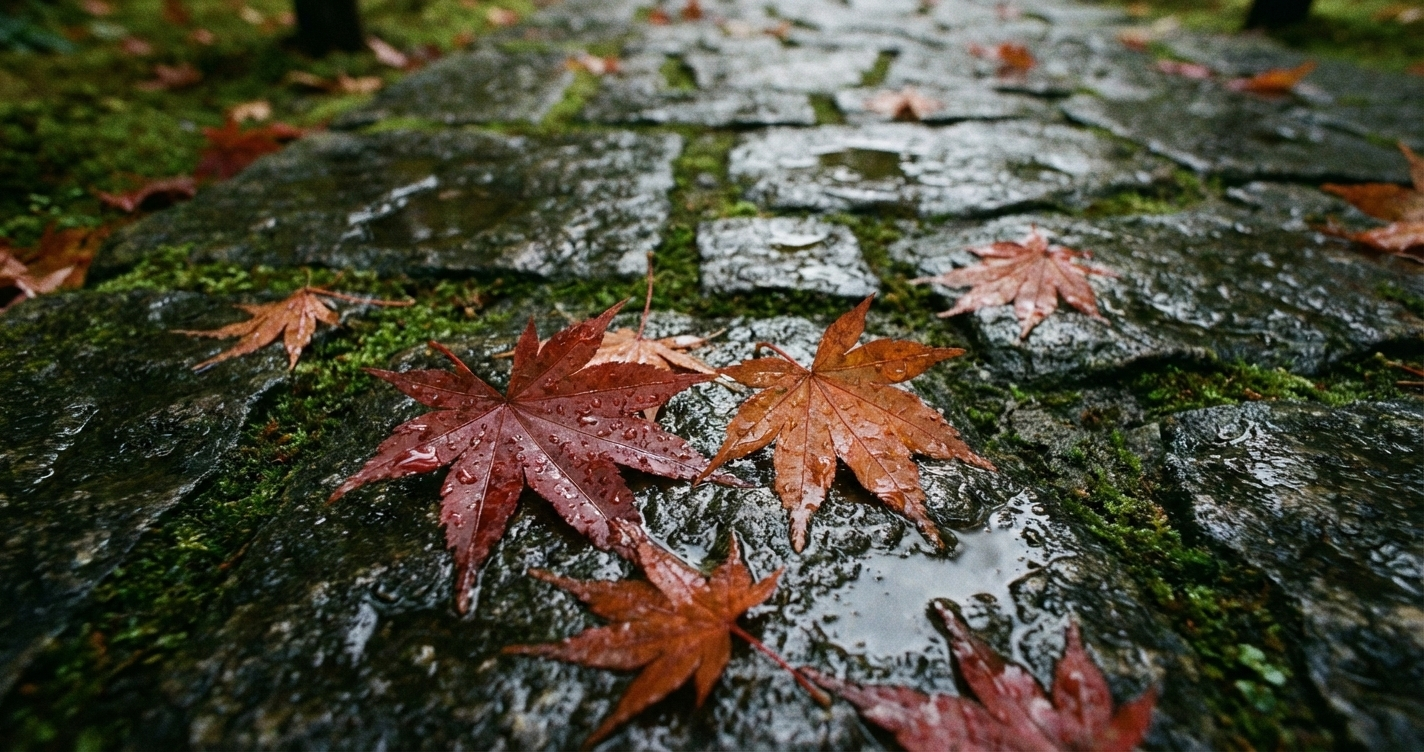
Light and timing for foliage photography: Early morning (6-8am) provides soft directional light that models tree forms and brings out color saturation without the harsh shadows of midday sun. This timing also avoids crowds at popular temples and gardens. Overcast conditions work surprisingly well for autumn foliage—cloudy skies act as giant diffusers creating even lighting without harsh highlights.
Weather variability and its effects: Autumn weather in Japan tends toward more instability than spring. Rain accelerates leaf drop, potentially shortening the peak viewing window. However, rain creates photography opportunities too—wet leaves display more saturated colors, and puddle reflections add compositional elements.
Gappy Helps You Navigate Real-Time Changes
Japan's autumn foliage season spans three months across the archipelago with each region's peak window lasting just 1-2 weeks—deciding which areas to visit, when to go, and how to adjust plans as forecasts evolve requires monitoring multiple information sources and making real-time decisions based on current conditions.
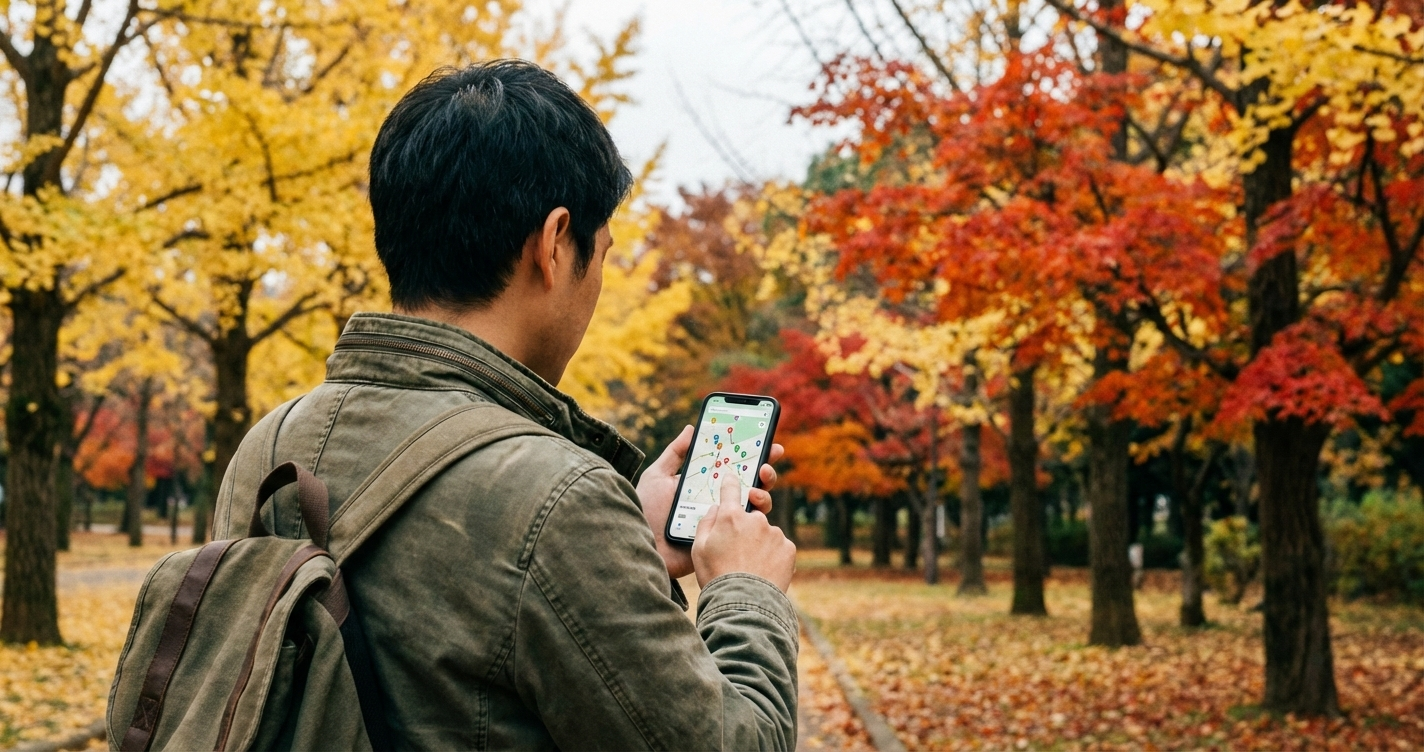
Gappy's AI concierge monitors official koyo forecasts from japan-guide.com, regional tourism sites, and national park updates, synthesizing this information to recommend optimal viewing locations based on your travel dates and current position. Ask questions like "Where are autumn leaves at peak near Tokyo right now?" or "Should I visit Kyoto or Nikko for better foliage this week?" to receive answers grounded in current forecast data rather than generic seasonal advice.
Get real-time autumn foliage recommendations from Gappy
Next Steps: Plan Your Adaptive Autumn Route
- Start monitoring 2024 forecasts in early September. Bookmark japan-guide.com's autumn forecast page and check it weekly.
- Book flexible accommodations. If planning Kyoto visits during November peak season, reserve accommodations 2-3 months in advance but choose cancellation-friendly options.
- Build altitude-based backup plans. Research both high-elevation and low-elevation viewing locations in the areas you'll visit.
Frequently Asked Questions
When is autumn season in Japan? Japan's autumn foliage season spans approximately September through December depending on region and elevation. Hokkaido's mountains color first in late September, followed by northern Honshu in October, central regions and Kansai in November, and southern Kyushu finishing the season in early December. The specific timing within these general windows varies 1-2 weeks annually based on summer heat and autumn temperatures.
Where can I see autumn leaves in Japan? The most famous autumn foliage locations include Kyoto's temple gardens (Tofukuji, Kiyomizudera, Eikando), Nikko National Park (Kegon Falls, Lake Chuzenji), Kamikochi in the Japan Alps, Hokkaido's Daisetsuzan National Park, and Lake Towada/Oirase Stream in Tohoku. Each region offers distinct character—Kyoto provides cultural temple settings, mountain areas offer wilderness scenery, and urban parks provide convenient viewing.
How long does autumn foliage last in Japan? Individual locations typically experience 1-2 weeks of peak autumn color before leaves begin falling, though the full season across all of Japan spans approximately 10-12 weeks from late September through early December. Peak viewing windows are shorter and less predictable than cherry blossom season because autumn weather variability (rain, wind) can accelerate leaf drop unexpectedly.
Is Kyoto or Nikko better for autumn leaves? Kyoto and Nikko offer different autumn foliage experiences rather than one being objectively better. Kyoto provides refined temple garden settings where landscape design frames autumn colors through architecture, peaking in mid-to-late November with massive crowds. Nikko offers dramatic natural scenery with waterfalls and mountain lakes, peaking in late October—approximately 2-3 weeks earlier than Kyoto.
Can I see Mt. Fuji and autumn leaves together? Yes, Mt. Fuji and autumn foliage can be photographed together at locations around the Fuji Five Lakes area (particularly Lake Kawaguchiko) and Hakone region during late October through early November. However, Mt. Fuji's visibility remains weather-dependent (clearly visible only about 30% of days even in autumn), so combining both elements requires both proper foliage timing and favorable visibility conditions.
Do I need to book autumn foliage viewing in advance? Most outdoor autumn foliage locations (mountains, gorges, parks) require no advance booking. However, accommodations in popular areas like Kyoto, Nikko, and Hakone during peak November season should be booked 2-3 months ahead. Some Kyoto temples have recently implemented timed entry tickets or advance reservations during peak season—check specific temple websites for current policies.
What should I wear for autumn foliage viewing in Japan? Bring layered clothing including a warm jacket for mountain areas and early morning viewing. Waterproof rain jacket is essential as autumn weather includes frequent rain. Comfortable walking shoes with good traction handle temple stairs and wet conditions. November temperatures in Kyoto typically range from 8-17°C, while mountain areas and Hokkaido can approach freezing.
Tags
Written by